Please wait a minute...
Table of Content
20 October 2025, Volume 53 Issue 5
For Selected: View Abstracts Toggle Thumbnails
  • Crop genetics and breeding. Corp cultivation
    Evaluation of common scab resistance and analysis of genetic variation in traits of potato hybrid progenies
    WU Guoqiang, GAO Rui, JIN Yihang, ZHANG Guizhi, JIANG Lili, XU Jieli, JIN Guanghui
    2025, 53(5):  1-14.  doi:10.12190/j.issn.2096-1197.2025.05.01
    Abstract ( 17 )   PDF (3745KB) ( 2 )   Save
    References | Related Articles | Metrics
    【Objective】 To investigate the resistance performance of potato hybrid progenies to common scab,the interrelationships among common scab incidence rate,disease area,and disease depth,as well as the segregation and genetic variation patterns of potato phenotypic traits.【Methods】 Resistance identification was conducted in a natural disease nursery,using 160 hybrid progenies from the cross between Kenshu No. 1 and Zhongshu No. 5(Combination 1) and 80 hybrid progenies from the cross between Kenshu No. 1 and Youjin(Combination 2) as experimental materials. Descriptive traits,numerical traits,and common scab-related indicators of potato were investigated to analyze the correlations among disease constituent factors,together with the resistance performance,discrete characteristics,and genetic performance of potato,and to calculate the coefficient of variation,mid-parent heterosis rates,transgressive heterosis rates,and relative heritability from the parental lines.【Results】 The common scab incidence rates for Combination 1 and Combination 2 were 10.71%-100% and 17.65%-100%,respectively;while the disease indices were 0.02-19.74 and 0.16-24.20,respectively. Highly significant positive correlations(P<0.01) were observed among incidence rate,disease area,and disease depth,and the resistance levels in both combinations exhibited transgressive segregation. The diversity indices of 10 descriptive traits in Combination 1 and Combination 2 were 0.23-1.71 and 0.26-1.33,respectively;the diversity indices of 6 numerical traits were 0.91-2.03 and 0.98-1.81,respectively. Among the 16 traits of Combination 1 and Combination 2,the mid-parent heterosis rates of potato were -33.39% to 29.38% and -19.04% to 43.20%,respectively,whereas the transgressive heterosis rates were 4.69% to 105.00% and -42.50% to 125.00%,respectively.【Conclusion】 Hybrid progeny populations derived from Kenshu No. 1×Zhongshu No. 5 and Kenshu No. 1×Youjin displayed transgressive segregation in common scab resistance levels,with highly significant positive correlations observed among common scab incidence rate,disease area,and disease depth. The variation of numerical traits in the hybrid progenies of the two combinations is more abundant than that of descriptive traits,and the heterosis performances of the hybrid progenies are varied.
    Effects of strip intercropping on soybean growth,development,and yield in saline-alkali land of Hetao Irrigation District
    ZHAO Xiaoyu, LIU Kunyu, GAO Yuanli, WANG Xuejiao, DU Erxiao, WU Juan, LI Wei, DONG Yuheng, SU Erhu, LI Qiang
    2025, 53(5):  15-24.  doi:10.12190/j.issn.2096-1197.2025.05.02
    Abstract ( 12 )   PDF (1756KB) ( 5 )   Save
    References | Related Articles | Metrics
    【Objective】 To clarify the effects of strip intercropping in saline-alkali land of the Hetao Irrigation District,Inner Mongolia,on soybean growth,development,and yield,thereby improving the utilization rate of saline-alkali cultivated land. 【Methods】 A maize-soybean strip intercropping experiment(4 rows of maize+4 rows of soybean)was conducted in Bayannur City,Inner Mongolia,from 2023 to 2024 using four soybean varieties—Heinong 81,Mengkedou 15,Mengkedou 25,and Suinong 71(180 000 plants/hm2)to analyze the variation patterns of agronomic traits,photosynthate production capacity,quality,and yield among different soybean varieties under saline-alkali land strip intercropping conditions,aiming to determine the effects of strip intercropping in saline-alkali land on soybean growth and development.【Results】 Over the two years,Mengkedou 15 exhibited the highest plant height(107.50 and 104.77 cm,respectively),was significantly higher than that of the other varieties(P<0.05);the lowest pod height was the shortest(11.33 and 11.58 cm,respectively),was significantly lower than that of the other varieties(P<0.05);the effective pod number per plant was the highest(15.24 and 15.85 pods,respectively). Over the two years,leaf SPAD values of the different soybean varieties gradually increased as the soybean growth stage progressed,reaching their maximum at the full seed to full maturity stage,with Mengkedou 15 being significantly higher than the other varieties(P<0.05),measuring 42.83 and 43.23,respectively. The leaf area index showed a pattern of first increasing and then decreasing as the growth stage progressed,reaching its maximum at the full seed(R6)stage,with Mengkedou 15 significantly higher than the others(P<0.05),measuring 3.31 and 3.41,respectively. Dry matter accumulation gradually increased as the growth stage advanced,peaking at the full maturity(R8)stage,with Mengkedou 15 being significantly higher than the others(P<0.05),measuring 940.21 and 945.37 g/m2,respectively. Suinong 71 had the highest protein content(39.98% and 40.21%). Mengkedou 15 had the highest fat content(22.58% and 22.67%)and total protein and fat content(58.73% and 58.26%). Soybean yield was highest for Mengkedou 15(1.53 and 1.59 t/hm2,respectively). Correlation analysis showed that soybean yield was highly significantly positively correlated with SPAD value and dry matter accumulation(P<0.01),with correlation coefficients of 0.97 and 0.96,respectively,and significantly negatively correlated with the lowest pod height(P<0.05),with a correlation coefficient of -0.87.【Conclusion】 Strip intercropping in saline-alkali land of the Hetao Irrigation District significantly affects soybean SPAD value and dry matter accumulation,consequently affecting soybean yield. Among the tested varieties,Mengkedou 15 showed the best performance in agronomic traits and yield and is suitable for maize-soybean strip intercropping in this region.
    Effects of straw returning methods on maize growth and brown soil nutrients in southeastern Liaoning Province
    XUE Bingdong, ZHANG Lili, MO Jiaojiao, ZHAO Xinyu, LIU Yongfu, QI Hua
    2025, 53(5):  25-35.  doi:10.12190/j.issn.2096-1197.2025.05.03
    Abstract ( 24 )   PDF (2479KB) ( 2 )   Save
    References | Related Articles | Metrics
    【Objective】 To elucidate the effects of straw returning methods on maize growth and brown soil nutrients in southeastern Liaoning Province.【Methods】 From 2022 to 2023,five treatments:no-tillage without straw returning(NT),no-tillage with straw mulching and returning(NTSR),plough tillage with straw returning(PTSR),rotary tillage with straw returning(RTSR)and strip rotary tillage with straw returning(SRTSR) were established at the experimental site of Dandong Academy of Agricultural Sciences in Fengcheng,Liaoning Province. To analyse the impacts of these treatments on maize dry matter accumulation,yield and yield components,and physical and chemical parameters of the plow layer soil.【Results】 In 2022,total dry matter accumulation of maize under NT and SRTSR treatments was significantly higher than that under PTSR treatment(P<0.05),pre-silking dry matter accumulation under NT treatment was significantly higher than that under NTSR and PTSR treatments(P<0.05),post-silking dry matter accumulation under NTSR treatment was significantly higher than that under PTSR treatment(P<0.05). In 2023,total dry matter accumulation under RTSR and SRTSR treatments was significantly higher than that under the other treatments(P<0.05),and that under NT and PTSR treatments was significantly higher than that under NTSR treatment(P<0.05),pre-silking dry matter accumulation under PTSR and SRTSR treatments was significantly higher than that under NTSR treatment(P<0.05),post-silking dry matter accumulation under RTSR treatment was significantly higher than that under NT,PTSR,and NTSR treatments(P<0.05). In 2022,yield under NT treatment was 4.82%,7.54%,23.96%,and 24.06% higher than that under SRTSR,NTSR,PTSR,and RTSR treatments,respectively;in 2023,yield under RTSR treatment was 2.87%,6.13%,8.46%,and 23.90% higher than that under SRTSR,NT,PTSR,and NTSR treatments,respectively. Soil total nitrogen content in 2022 was PTSR>RTSR>SRTSR>NT>NTSR,with PTSR treatment was 1.82%,4.68%,17.50%,and 21.35% higher than the other treatments,respectively;in 2023,the soil total nitrogen content was PTSR>RTSR>SRTSR>NTSR>NT,with PTSR treatment was 5.52%,12.63%,15.98%,and 19.58% higher than the other treatments,respectively. In 2022,soil bulk density under NT treatment was significantly higher than that under RTSR and PTSR treatments(P<0.05);in 2023,soil bulk density under NT and NTSR treatments was significantly higher than that under the other treatments(P<0.05),and SRTSR and RTSR treatments was significantly higher than PTSR treatment(P<0.05). The average soil organic matter content across all treatments in 2023 was 5.11% higher than that in 2022,RTSR and PTSR treatments was significantly higher than the other treatments in 2022 and 2023(P<0.05),and soil organic matter content under NTSR and SRTSR treatments was significantly higher than that under NT treatment(P<0.05). There was no significant differences in soil total salt content between years(P>0.05);in 2022,soil total salt content under RTSR treatment was significantly higher than that under NTSR,PTSR,and NT treatments(P<0.05);in 2023,soil total salt content under RTSR and SRTSR treatments was significantly higher than that under the other treatments(P<0.05).【Conclusion】 Straw returning can significantly affect maize dry matter accumulation and distribution in southeastern Liaoning Province,promote increases in organic matter and total nitrogen contents in the plow layer of brown soil,and reduce soil bulk density.
    Germplasm resources-Plant protection
    Evaluation of fluorescence characteristics and screening of high light-use efficiency germplasm in 154 buckwheat varieties
    HU Haochi, WU Yening, XIE Rui, LIU Jinchuan, WEN Rui, WANG Zhichao, WANG Chunyong, YU Chuanzong, JIN Xiaolei
    2025, 53(5):  36-48.  doi:10.12190/j.issn.2096-1197.2025.05.04
    Abstract ( 17 )   PDF (2499KB) ( 4 )   Save
    References | Related Articles | Metrics
    【Objective】 To explore the effect of key fluorescence parameters on the characterizing value of high light-use efficiency in buckwheat and to screen high light-use efficiency buckwheat germplasm through fluorescence characteristic evaluation,providing a scientific basis and material support for high light-use efficiency breeding.【Methods】 A randomized block field experiment was conducted,using 154 buckwheat varieties as experimental materials. Twenty-five chlorophyll fluorescence parameters were measured. Correlation analysis,principal component analysis (PCA),and systematic clustering-shortest distance analysis were employed to comprehensively evaluate the fluorescence characteristics of buckwheat and identify superior germplasm resources with high light-use efficiency.【Results】 Highly significant differences were observed in chlorophyll fluorescence parameters among different buckwheat varieties(P<0.01). Specifically,parameters PI abs、PI total,ETo/CSm,DIo/RC,REo/CSm,Fv/Fo,TRo/CSm,Fv and Fo/Fm showed larger coefficients of variation(CV) values,all exceeding 25.00%. Parameters DF total,DF abs,TRo/RC,DIo/CSm and Fo showed smaller CV values,ranging from 0.71% to 7.97%. Broad-sense heritability of all other parameters,except TRo/RC,REo/RC,REo/CSo and PI total,was greater than 60.00%. Principal component analysis revealed that the cumulative contribution rate of the top four principal components reached 96.758%,and a comprehensive evaluation function model was established as A=0.612A1+0.190A2+0.130A3+0.068A4,with A values for the 154 buckwheat varieties ranging from -2.68 to 1.20. Clustering analysis of the A values classified the tested varieties into five categories:2 buckwheat varieties(NQ148 and NQ150) were classified as the high light-use efficiency germplasm type,105 varieties were classified as the relatively high light-use efficiency germplasm type,44 varieties were classified as the moderate light-use efficiency germplasm type,2 varieties were classified as the relatively low light-use efficiency germplasm type,and 1 variety was classified as the low light-use efficiency germplasm type.【Conclusion】 Two buckwheat varieties(NQ148 and NQ150) with high light-use efficiency were successfully screened,providing materials for the breeding of high light-use efficiency germplasm resources in buckwheat.
    Control efficacy of 60% Flumioxazin·Acetochlor·Clomazone oil dispersion on annual weeds in soybean fields
    GUO Xiaotong, GUO Yulian, WANG Yu, LUO Chan, CONG Keqiang, JIANG Wannian, YU Gang
    2025, 53(5):  49-56.  doi:10.12190/j.issn.2096-1197.2025.05.05
    Abstract ( 26 )   PDF (692KB) ( 7 )   Save
    References | Related Articles | Metrics
    【Objective】 To determine the control efficacy of 60% Flumioxazin·Acetochlor·Clomazone oil dispersion on annual weeds in soybean fields.【Methods】 Field plot experiments were conducted in 2021 and 2022 to determine the plant number control efficacy and fresh weight control efficacy on annual weeds in soybean fields,as well as soybean yields following application of 60% Flumioxazin·Acetochlor·Clomazone oil dispersion.【Results】 At the application rate of 2 400-3 000 mL/hm2,the plant number control efficacy on total weeds was 84.5%-97.4% in 2021 and 86.7%-97.9% in 2022,respectively,and the fresh weight control efficacy was 90.1%-99.0% in 2021 and 91.1%-99.2% in 2022,respectively at 40 d after application;compared to the control,the soybean yield in all tested herbicide treatment plots increased significantly in both 2021 and 2022,with yield increase rates of 115.8%-142.7% and 96.2%-108.6%,respectively.【Conclusion】 The 60% Flumioxazin·Acetochlor·Clomazone oil dispersion,when applied at a dosage of 3 000 mL/hm2,exhibits excellent control efficacy on annual weeds in soybean fields.
    Screening and virulence determination of highly virulent strains of Serratia nematodiphila against Plutella xylostella
    XU Chaoying, YANG Chaofan, SONG Ping, LI Xin, NANGONG Ziyan
    2025, 53(5):  57-66.  doi:10.12190/j.issn.2096-1197.2025.05.06
    Abstract ( 17 )   PDF (4624KB) ( 2 )   Save
    References | Related Articles | Metrics
    【Objective】 To screen highly effective microbial biocontrol strains against Plutella xylostella.【Methods】 The strains of Serratia nematodiphila(FQ268,LJ232,YC310,and YC278) were subjected to physiological and biochemical characterization. High-activity strains were screened using the leaf-dip method,followed by antibiotic susceptibility testing and insecticidal virulence determination against P. xylostella.【Results】 All four S. nematodiphila strains were Gram-negative. The methyl red test,indole test,cellulose degradation test,and lipase activity test were negative,while the catalase test and citrate utilization test were positive. All four strains could utilize glucose and mannitol to produce acid but could not utilize fructose and inositol. The high-activity strain identified was S. nematodiphila FQ268,which was susceptible to ceftriaxone,gentamicin sulfate,and norfloxacin,but resistant to rifampicin,cefradine,penicillin,erythromycin,and tetracycline. The fermentation broth of S. nematodiphila FQ268(5.58×10⁹ CFU/mL) exhibited LC50 values of 1.742×10⁹ and 2.566×10⁷ CFU/mL against second-instar larvae of P. xylostella at 48 and 72 h,respectively.【Conclusion】 S. nematodiphila FQ268 shows high insecticidal activity against second-instar larvae of P. xylostella and represents a relatively efficient microbial biocontrol strain.
    Soil and fertilizer-Physiology and biochemistry
    Effects of straw returning combined with microbial agents on soil physical properties and maize yield
    DUAN Sitong, ZHANG Yidi, ZHAO Zihao, WANG Weini, LIU Junmei, XING Jun, ZHANG Dejian, LI Juan, ZHANG Xiangqian
    2025, 53(5):  67-77.  doi:10.12190/j.issn.2096-1197.2025.05.07
    Abstract ( 25 )   PDF (3787KB) ( 1 )   Save
    References | Related Articles | Metrics
    【Objective】 To address issues such as declining soil fertility and soil compaction in farmland of the irrigation area on the south bank of the Yellow River in Inner Mongolia,suitable microbial agents were screened for application in this region,providing a reference for the application and promotion of straw returning combined with microbial agents.【Methods】 The experiment was conducted in Dalad Banner,Ordos City,Inner Mongolia,from 2022 to 2023,using the maize variety Lihe No. 1 as the test material. Based on a foundation of straw returning,four different microbial agent treatments were established:Bacillus subtilis(Treatment A),Bacillus subtilis+Bacillus licheniformis(Treatment B),Bacillus subtilis+Saccharomyces cerevisiae(Treatment C),and Bacillus subtilis+Trichoderma harzianum(Treatment D),with no microbial agent application as the control(CK). The effects of different treatments on soil physical properties in the 0-60 cm soil layer and on maize yield were analyzed.【Results】 The mass fraction of large aggregates(≥0.25 mm)in treatments A and B was significantly higher than that in CK,promoting soil stability;in the 40-60 cm soil layer,the soil bulk density in treatments A and B was significantly reduced by 6.84% and 6.43% compared with CK(P<0.05);the total soil porosity was significantly increased by 4.41 and 4.09 percentage points compared with CK(P<0.05);the soil mass water content in all treatments fluctuated throughout different maize growth stages,reaching its peak during the large bell mouth stage. The maize grain yield of all treatments significantly increased by 2.57% to 10.34% compared with CK;the resulting economic benefits increased by 6.57% to 47.57% compared with CK,with treatments A and B being the highest at 8 514.93 and 7 413.82 CNY/hm2,respectively.【Conclusion】 Under straw returning conditions,the application of the microbial agents Bacillus subtilis and Bacillus subtilis+Bacillus licheniformis can better reduce soil bulk density,increase soil aeration,improve soil physical structure,and achieve higher maize grain yield and economic benefits.
    Research progress on the antimicrobial and degradation functions of Streptomyces griseorubens and their mechanisms
    HAN Chao, ZHU Yufei, LI Xinxin, PENG Zhidong, DU Lei, KANG Wenqin
    2025, 53(5):  78-87.  doi:10.12190/j.issn.2096-1197.2025.05.08
    Abstract ( 17 )   PDF (996KB) ( 8 )   Save
    References | Related Articles | Metrics
    Streptomyces griseorubens,a species of the genus Streptomyces,exhibits multiple physiological functions,including inhibition of the growth and reproduction of plant pathogens and degradation of lignocellulosic biomass solid waste. It has broad application in agricultural production,food hygiene,environmental protection,and other fields. This review summarizes the biological characteristics,antimicrobial and degradation functions,and underlying mechanisms of S. griseorubens. Furthermore,the future application prospects and research directions of S. griseorubens are discussed,aiming to provide a basis for the enhanced development and utilization of S. griseorubens in agricultural production.
    Effects of calcium regulation and supplementation techniques on stone cell content and fruit quality in Korla fragrant pear
    ZHANG Zaihua, QIN Weiming, DING Weilin, SUN Mingming, WANG Lin, ZHANG Peiping, JIANG Zhencui, CHANG Dayong
    2025, 53(5):  88-97.  doi:10.12190/j.issn.2096-1197.2025.05.09
    Abstract ( 22 )   PDF (3305KB) ( 2 )   Save
    References | Related Articles | Metrics
    【Objective】 To explore the effects of endogenous calcium regulation and exogenous calcium supplementation techniques on stone cell content and fruit quality in Korla fragrant pear.【Methods】 Eight-year-old Korla fragrant pear trees with an open-center canopy were used as experimental materials,and four different treatments were established:T1,foliar spraying of calcium regulator on April 12,April 23,May 12,July 24,and August 2;T2,same calcium regulator treatment as T1,with additional root flushing application of Calcium Quanwei on May 12 and August 2;T3,same calcium regulator treatment as T1,with additional root flushing application of imported calcium fertilizer on May 12 and August 2;CK,spraying with clear water. Stone cell content in fruits from each treatment and the diameter and density of stone cell clusters at the maturity stage were determined,and the effects of different treatments on external and internal quality of fruits at the harvest stage were analyzed.【Results】 The stone cell content in Korla fragrant pear under T2 treatment was the lowest at all stages. Compared with CK,T1 treatment,and T3 treatment,the stone cell content under T2 treatment at the maturity stage was significantly reduced by 67.63%,43.25%,and 24.21%,respectively(P<0.05),and the diameter of stone cell clusters was reduced by 7.24%,4.37%,and 1.69%,respectively. At the harvest stage,the proportion of calyx shedding fruits under T2 treatment was the highest(66%). Compared with CK,T1 treatment,and T3 treatment,the single fruit weight of calyx shedding fruits under T2 treatment increased by 8.80%,3.37%,and 0.62%,respectively;fruit hardness increased by 19.36%,4.25%,and 0.78%,respectively;soluble solids content increased by 50.90%,14.57%,and 1.14%,respectively;vitamin C content increased by 46.49%,21.12%,and 3.89%,respectively;soluble sugar content increased by 13.29%,5.28%,and 1.83%,respectively;titratable acid content decreased by 27.27%,11.93%,and 4.95%,respectively;tannin content decreased by 43.06%,21.15%,and 12.77%,respectively;calcium content increased by 10.69%,4.46%,and 1.13%,respectively.【Conclusion】 The synergistic regulation of calcium regulator and Calcium Quanwei can effectively reduce stone cell content in Korla fragrant pear fruits,increase the proportion of calyx shedding fruits,single fruit weight,and fruit hardness,elevate the contents of soluble solids,vitamin C,soluble sugars,and calcium in fruits,and decrease the contents of titratable acid and tannin,making it a suitable calcium regulation and supplementation technique for improving fruit quality in Korla fragrant pear.

    Aquaculture
    Fish community structure characteristic and diversity in Shahu Lake,Ningxia
    LIU Jiacheng, WANG Yongjie, LIU Kai, XIAO Wei, LIAN Zongqiang, ZHANG Feng, LIU Yanbin
    2025, 53(5):  98-107.  doi:10.12190/j.issn.2096-1197.2025.05.10
    Abstract ( 18 )   PDF (3264KB) ( 8 )   Save
    References | Related Articles | Metrics
    【Objective】 To understand the community structure characteristic and diversity of the fish in Shahu Lake,Ningxia,providing support for fish diversity conservation and scientific management of Shahu Lake.【Methods】 Fishery resources surveys were conducted at five sampling sites in Shahu Lake [Holiday Hotel Pier(S1),New Water Inlet(S2),Lake Center(S3),North Shahu Lake(S4),and West Beach(S5)] in May,August,and November 2024. The fish species composition and ecological type classification were analyzed,dominant fish species and diversity,and the stability,structure similarity of that community were analyzed on the temporal and spatial distribution.【Results】 A total of 746 fish individuals were collected across the three surveys,belonging to 15 species,13 genera,5 families,and 3 orders. The Cyprinidae was the most numerous(9 species),accounting for 60.00%. In the ecological type classification,carnivorous and omnivorous fish were the most numerous(7 species each),both accounting for 46.67%;inhabiting the demersal layer fish were the most numerous(7 species),accounting for 46.67%;and fish producing adhesive eggs were the most numerous(12 species),accounting for 80.00%. The relative importance index(IRI) analysis showed that Sander lucioperca and Carassius auratus were the dominant species in Shahu Lake. On the temporal scale,the Shannon-Wiener diversity index of fishes ranged from 1.388 to 1.565,with an average of 1.448;the Margalef richness index ranged from 1.347 to 2.117,with an average of 1.803;and the Pielou evenness index ranged from 0.526 to 0.752,with an average of 0.637. The abundance/biomass comparison curve showed that on the temporal scale,the fish communities in May and November 2024 experienced intermediate disturbance,while the disturbance in August was minor;on the spatial scale,the fish communities at S1,S3,and S4 experienced intermediate disturbance,while the disturbance at S2 and S5 was minor. The community Jaccard similarity index across the three surveys ranged from 0.462 to 0.547,and the Jaccard similarity index among the five sampling sites ranged from 0.316 to 0.727.【Conclusion】 The fish community structure in Shahu Lake is relatively simple,and the diversity level is generally moderate. Its changes are primarily caused by the combined effects of anthropogenic disturbance(tourism development,water pollution)and fish invasion(Sander lucioperca).
    Longitudinal gradient pattern of fish community in the Hulan River
    XIONG Shuhan, LI Peilun, LIU Jiacheng, WANG Jilong
    2025, 53(5):  108-116.  doi:10.12190/j.issn.2096-1197.2025.05.11
    Abstract ( 14 )   PDF (1881KB) ( 1 )   Save
    References | Related Articles | Metrics
    【Objective】 To investigate the assembly mechanisms of fish community in the Hulan River and clarify their longitudinal gradient pattern,providing a basis for fish diversity conservation.【Methods】 Thirty-one sampling sites were set along the longitudinal gradient from the source to the estuary of the Hulan River for fish sampling. A two-way crossed ANOSIM was used to test the effect of different river sections on fish community structure. Similarity percentages was used to identify the key species maintaining the similarity of fish community structure in different river sections. Redundancy analysis was used to examine the relationship between fish taxa and the distance from the estuary.【Results】 A total of 4 128 fish individuals were surveyed,belonging to 37 species,30 genera,12 families,and 7 orders. The fish community structure showed significant spatial variation across the upper,middle,and lower reaches of the Hulan River(Global R=0.69,P<0.05). The succession of the fish community from the upper to the middle reaches was characterized by the loss of Lefua costata and Cottus czerskii,and the gain of Gobio cynocephalus,Acheilognathus macropterus,Abbottina rivularis,Rhodeus ocellatus,Cobitis granoci,Pseudorasbora parva and Gobio tenuicorpus. The succession from the middle to the lower reaches was characterized by the loss of G. cynocephalus,Phoxinus lagowskii,Barbatula nuda and C. granoci,and the gain of Hemiculter leucisculus,Carassius auratus,Misgurnus bipartitus,Paramisgurnus dabryanus,Opsariichthys bidens and Hemibarbus maculatus. Redundancy analysis examine results showed a positive correlation between the distance from the estuary and P. lagowskii,B. nuda,C. czerskii,L. costata,Lota lota,Salvelinus malma,Pungitius sinensis and Rhodeus sinensis. Conversely,H. leucisculus,A. macropterus,P. parva,Silurus asotus,A. rivularis,C. auratus,H. maculatus,Rhinogobius cliffordpopei and Misgurnus mohoity showed a negative correlation with the distance from the estuary.【Conclusion】 The succession of the fish community along the longitudinal gradient of the Hulan River exhibits a pattern of loss of cold-water fish and gain of widely distributed species,indicating a turnover pattern.
    Agricultural information technology
    Research on a lightweight potato disease recognition neural network based on knowledge distillation
    HOU Dingyi, ZHANG Peng, SUN Mengyuan, ZHANG Yang, LIU Ruifang, LI Liping, HOU Jianwei
    2025, 53(5):  117-126.  doi:10.12190/j.issn.2096-1197.2025.05.12
    Abstract ( 17 )   PDF (4221KB) ( 6 )   Save
    References | Related Articles | Metrics
    【Objective】 To explore the application effectiveness of a lightweight deep neural network based on knowledge distillation for potato disease recognition,providing a reference for disease prevention and control in smart agriculture.【Methods】 A potato disease dataset containing 12 000 images across three categories(healthy,early blight,and late blight) was constructed using the public PlantVillage dataset and self-collected data. This dataset was divided into training,validation,and test sets in a ratio of 7∶1∶2. First,EfficientNet-B3 was trained as the teacher network. Subsequently,a dual-path knowledge transfer framework was constructed,with MobileNetV3-Small serving as the student network. Key discriminative features were extracted through a feature selection mechanism,and an adaptive knowledge distillation strategy was employed for simultaneous knowledge transfer at the feature and prediction layers. The loss weights were dynamically adjusted based on the training state. The student network was trained under the guidance of the teacher network to obtain an improved model that achieves both lightweight architecture and high recognition performance,and was compared with the un-distilled MobileNetV3-Small baseline model.【Results】 The improved model achieved an accuracy of 97.80% for potato disease detection on the test set,representing a 3.20 percentage point improvement over the baseline model and closely approaching the teacher network′s performance level of 98.50%. The model′s parameter count was only 1.60 M and its floating-point operations(FLOPs)were 62.03 M,which were 85.05% and 93.75% less than the teacher network,respectively. Grad-CAM visualization analysis confirmed that the model precisely locates key diagnostic features,such as the concentric rings of potato early blight and the water-soaked lesions of potato late blight,with the heatmap highly matching with the diseased regions.【Conclusion】 The lightweight potato disease recognition model based on adaptive knowledge distillation achieves both high accuracy and low computational complexity. It can effectively recognize the features of potato early blight and late blight,making it suitable for resource-constrained field environments.
    Research on a varietal identification model for wine grapes based on SVM-RFE
    LYU Xuemei, LI Hongjuan
    2025, 53(5):  127-134.  doi:10.12190/j.issn.2096-1197.2025.05.13
    Abstract ( 19 )   PDF (4027KB) ( 4 )   Save
    References | Related Articles | Metrics
    【Objective】 To address the issues of low efficiency in traditional grape variety identification methods and poor interpretability of machine learning models,providing a scientific basis for rapid field identification of grape varieties.【Methods】 An efficient identification model for wine grape varieties was constructed based on leaf morphological traits. Utilizing the support vector machine-recursive feature elimination(SVM-RFE) method,seven major wine grape varieties in Yantai,Shandong Province,were selected as research objects,for which seventeen leaf morphological traits were measured. The Bayesian optimization(BO) algorithm was used to optimize the parameters of the support vector machine(SVM),K-nearest neighbors(KNN),and decision tree(DT) models. Model performance was evaluated based on AUC value,and key features were screened using RFE combined with the corresponding model classification accuracy.【Results】 The SVM model optimized by BO exhibited the best performance,achieving an AUC value of 0.960 7,a precision of 95.56%,a recall of 84.31%,and an accuracy of 95.46%,with an F1 score of 0.895 8 when setting Cabernet Gernischt as the positive class. RFE screened out 14 key features,and the constructed BO-SVM-RFE model maintained high performance while achieving an improved model accuracy of 96.05% and further enhancing model interpretability.【Conclusion】 A varietal identification model for wine grapes based on SVM-RFE(the BO-SVM-RFE model) was successfully constructed,and 14 key identification indicators,including petiole length,were clarified.
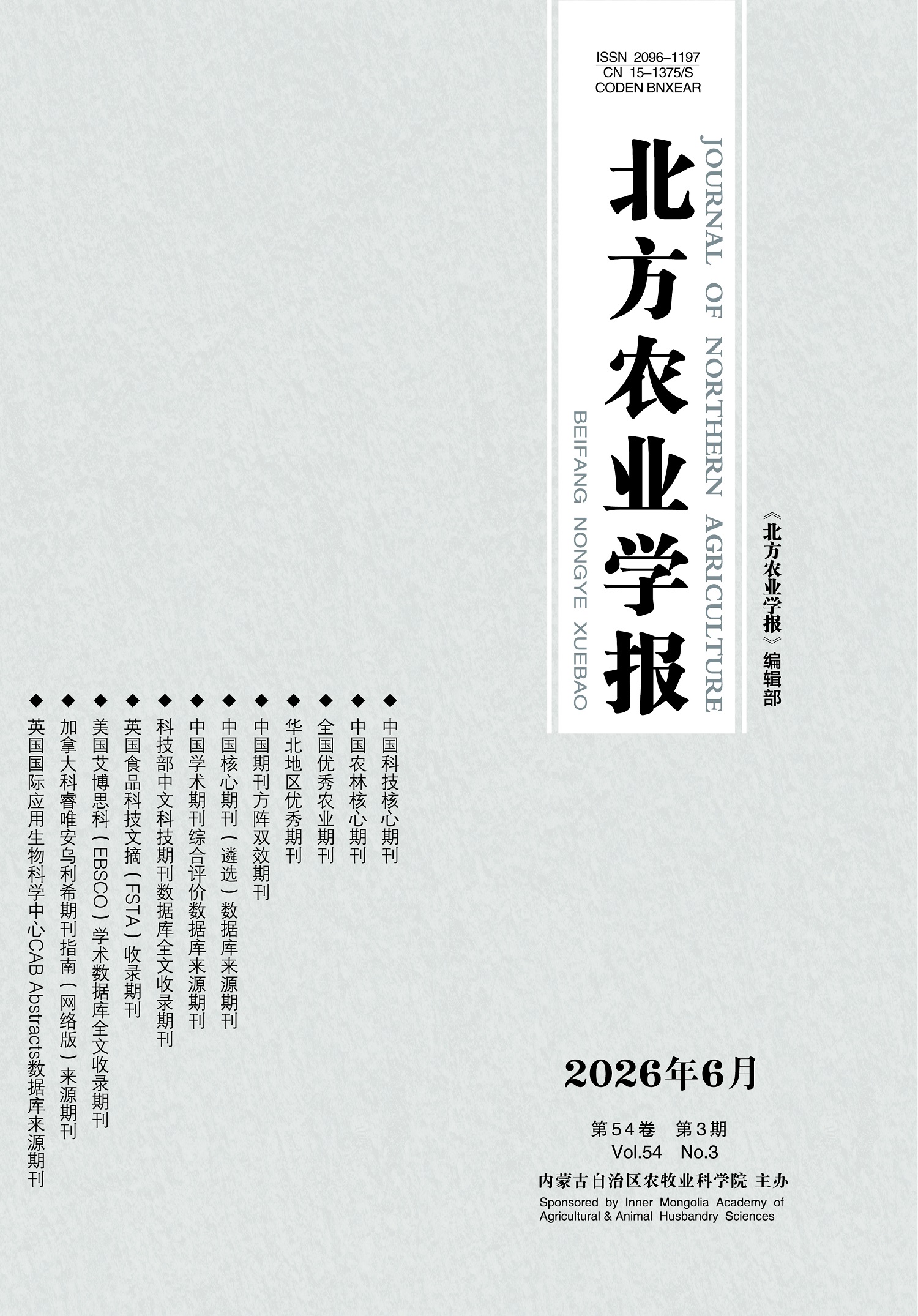
ISSN 2096-1197
CN 15-1375/S
CODEN BNXEAR
chief editor: LU Zhanyuan
Responsible Unit: Inner Mongolia Academy of Agricultural and Animal Husbandry Sciences
Sponsor Unit: Inner Mongolia Academy of Agricultural and Animal Husbandry Sciences
Editing Unit: Editorial Department of Journal of Northern Agriculture
Address: Inner Mongolia Academy of Agricultural and Animal Husbandry Sciences,22 Zhaojun Road,Hohhot,China
E-mail: bfnyxb@126.com