Please wait a minute...
Table of Content
20 August 2026, Volume 54 Issue 4
For Selected: View Abstracts Toggle Thumbnails
  • Crop cultivation·Germplasm resources
    Analysis of medicinal components of Polygonatum sibiricum and soil physicochemical properties in dryland farming areas of northern China
    XU Ziyi, YANG Ying, WANG Qian, ZHANG Kaizhen, OU Xiaobin, LIU Haiqing
    2026, 54(4):  1-9.  doi:10.12190/j.issn.2096-1197.2026.04.01
    Abstract ( 26 )   PDF (2071KB) ( 5 )   Save
    References | Related Articles | Metrics
    【Objective】To explore the differences in medicinal components of Polygonatum sibiricum and soil physicochemical properties in dryland farming areas of northern China.【Methods】The experiment was conducted in Qingyang City,Gansu Province,from 2020 to 2024. Four cultivation sites were established:S1,S2,S3(field cultivation sites),and S4(wild tending site). S1 was subjected to a density experiment(T1:20 cm×15 cm,T2:25 cm×15 cm,T3:25 cm×20 cm,T4:25 cm×25 cm),and S2 was subjected to a shading experiment(row spacing×plant spacing of 25 cm×20 cm,with two treatments:50% shading and no shading). The medicinal components of P. sibiricum at different cultivation sites and the soil physicochemical properties at the field cultivation sites were determined.【Results】A row spacing of 25 cm×plant spacing of 20 cm was a relatively suitable planting density,and the fresh weight of P. sibiricum was the highest(8 858.85 kg/hm2);the 50% shading treatment extremely significantly increased the aboveground dry weight,rhizome dry weight,seedling survival rate and dry weight of P. sibiricum(P<0.01). The rhizome length,rhizome diameter,fresh weight per plant and dry weight per plant of P. sibiricum at S1,S2 and S3 were higher than those at S4,and their mean values were 36.04%,53.05%,656.67% and 709.10% higher than those at S4,respectively. In terms of medicinal components,the total saponin content was the highest at S2,which was 31.27 mg/g;the polysaccharide content was the highest at S3,which was 103.03 mg/g;and the total phenol content was the highest at S4,which was 0.65 mg/g. In terms of soil physicochemical properties,the total nitrogen content(1.34 g/kg),organic matter content(26.42 g/kg),alkali-hydrolyzable nitrogen content(87.69 mg/kg)and moisture content(20.82%) at S2 were extremely significantly higher than those at S1 and S3(P<0.01).【Conclusion】The artificial cultivation of P. sibiricum in dryland farming areas of northern China has good adaptability. A row spacing of 25 cm and plant spacing of 20 cm is a relatively suitable planting density,and the 50% shading treatment can improve the seedling survival rate of P. sibiricum. There are significant differences in the contents of medicinal components of P. sibiricum at four cultivation sites and the physicochemical properties of non-rhizosphere soil at three field cultivation sites.
    Analysis and evaluation of agronomic traits of Vigna angularis germplasm resources in northeast China
    CUI Zhihui, KANG Zeran, WANG Xiaolei, LIU Yingchun, ZHOU Xuechao, HU Haibo, ZHANG Qingyan, WEI Yunshan
    2026, 54(4):  10-23.  doi:10.12190/j.issn.2096-1197.2026.04.02
    Abstract ( 25 )   PDF (3370KB) ( 3 )   Save
    References | Related Articles | Metrics
    【Objective】To analyze the agronomic traits of Vigna angularis germplasm resources in northeast China,providing a basis for genetic improvement and breeding of new V. angularis varieties.【Methods】Genetic diversity analysis,correlation analysis,cluster analysis,principal component analysis and comprehensive evaluation were conducted on nine agronomic traits of 274 V. angularis germplasm resources in northeast China,and the quality of excellent germplasm resources was analyzed.【Results】The coefficients of variation of the nine agronomic traits ranged from 10.66% to 44.90%,and the traits with relatively high coefficients of variation were yield per plant,number of pods per plant,and number of main stem branches(44.90%,38.09% and 37.49%,respectively);the genetic diversity indexes ranged from 1.85 to 2.13,with the highest genetic diversity index for hundred-seed weight(2.13);there were different degrees of correlation among the nine agronomic traits;among them,pod width was extremely significantly positively correlated with hundred-seed weight,and the number of pods per plant was extremely significantly positively correlated with yield per plant,with the coefficients of correlation of 0.685 and 0.677,respectively;cluster analysis classified the nine agronomic traits into four groups;principal component analysis showed that the cumulative contribution rate of the first four principal components was 76.960%. Among the top 20 germplasm resources based on comprehensive evaluation,185,200,105,201 and 184 were high-yield germplasm resources;200,105,106 and 184 had large-seed characteristics,which were suitable for breeding for seed appearance quality;105,234 and 216 belonged to multi-pod type germplasm resources. In terms of quality traits,germplasm resource 200 had a relatively high protein content(25.16 g/100 g).【Conclusion】Among the 274 V. angularis germplasm resources in northeast China,germplasm resource 184 has the characteristics of high yield and large seed,and germplasm resource 200 has the characteristics of high yield,large seed and high protein. Both are breeding materials with good comprehensive traits and can be used as excellent parents in genetic improvement and new variety breeding of V. angularis.
    Molecular biology·Physiology and biochemistry
    Current application status and prospects of InDel molecular markers in edible fungi
    LIU Rui, LIU Yuandong, XU Yan, ZHUANG Qiuli, WANG Qi, WANG Jingwen, DANG Shuai, HAO Fengmin, YAN Lei
    2026, 54(4):  24-33.  doi:10.12190/j.issn.2096-1197.2026.04.03
    Abstract ( 23 )   PDF (1180KB) ( 3 )   Save
    References | Related Articles | Metrics
    Due to the limited number of InDel molecular markers developed in edible fungi,insufficient functional validation of candidate genes,their concentration mainly on major cultivated edible fungi,and the relatively late start of application research in edible fungi,basic research remains insufficiently in-depth. With the development of whole-genome sequencing technology,the application potential of InDel molecular markers in genetic analysis,variety identification and high-quality variety breeding of edible fungi has been further released,and the applications in the field of edible fungi research have been increasing. The paper reviews the application progress of InDel molecular markers in the evaluation of germplasm resources,variety identification and protection,and breeding of edible fungi,conducts a visual analysis of the relevant literature using VOSviewer method,and examines existing problems as well as future application directions and research priorities of this technology in the edible fungi field,with the aim of providing technical support for studies on elucidating the genetic background of strains,molecular-assisted breeding,identification of specific functional genes,and exploration of related mechanisms of edible fungi.
    Effects of sterol derivative SC303 on soybean seed germination and seedling root morphology
    WANG Haoran, DUAN Yuanhao, CHEN Xunqi, LI Li, WANG Mengxue, JIN Xijun
    2026, 54(4):  34-42.  doi:10.12190/j.issn.2096-1197.2026.04.04
    Abstract ( 22 )   PDF (2073KB) ( 4 )   Save
    References | Related Articles | Metrics
    【Objective】To investigate the effects of the sterol derivative SC303 on seed germination and seedling root morphology of soybean,and provide a reference for soybean production.【Methods】Five concentrations of SC303 were established:0.02 μmol/L(T1),0.10 μmol/L(T2),0.50 μmol/L(T3),2.50 μmol/L(T4),and 5.00 μmol/L(T5),with distilled water as the control(CK). Soybean variety Heihe 43 was soaked for 8 h. On days 1,3,5,and 7 of the germination test,amylase activities in cotyledons,cotyledons and root free amino acids content of soybean were measured. Germination rate,germination potential and root morphological indicators were analyzed,and the correlations among these indicators were evaluated via Mantel test.【Results】Seed soaking with different concentrations of SC303 significantly affected soybean seed germination and the germination rates of T1,T4 and T5 treatments were 96.00%,92.00% and 95.33%,respectively,all significantly higher than that of CK(P<0.05);the germination potential of T1 treatment was the highest(92.00%),which was significantly higher than that of CK(P<0.05). The amylase activity in soybean cotyledons of each treatment was significantly different and the effect of T3 treatment performed best,with amylase activity of 0.55 U/g on day 1,reaching a peak on day 5(0.76 U/g),and maintaining a high level on day 7(0.70 U/g),all significantly higher than that of CK(P<0.05);the content of free amino acids in cotyledons of T3 treatment was 348.19 mg/g on day 5,which was significantly increased by 93.60% compared with CK(P<0.05),and was 328.20 mg/g on day 7. The contents of free amino acids in root of T3 and T4 treatments on day 1 were 83.04 and 86.86 mg/g,respectively,which were significantly higher than that of CK(P<0.05). The total root length,root volume,root surface area and root tip number of T3 treatment were the highest,reaching 96.62 cm,0.35 cm3,21.53 cm2 and 167.50,respectively. Mantel analysis indicated that germination characteristics were extremely significantly positively correlated with the amylase activities in cotyledons on days 1,3,and 5(Mantel′s r>0.4,P<0.01),and with the content of free amino acids in root on day 5(Mantel′s r>0.4,P<0.01);root morphological characteristics were extremely significantly positively correlated with the contents of free amino acids in root on days 3 and 5(Mantel′s r>0.4,P<0.01).【Conclusion】The treatment with 0.50 μmol/L SC303 significantly increases the amylase activity in soybean cotyledons and the content of free amino acids in root,providing material support for seed germination. It also promotes root elongation,expands root surface area,increases the number of root tips,and optimizes root architecture. This concentration is suitable for promoting soybean seed germination and early root establishment,showing development potential.
    Research progress on the vertical distribution patterns of nitrogen content in maize canopies
    YANG Xin, ZHANG Baolin, Aruhan, SUN Hongyue, ZHENG Wei
    2026, 54(4):  43-51.  doi:10.12190/j.issn.2096-1197.2026.04.05
    Abstract ( 24 )   PDF (664KB) ( 3 )   Save
    References | Related Articles | Metrics
    The vertical distribution of nitrogen content in maize canopies exhibits spatial heterogeneity. Clarifying its distribution patterns is conducive to improving nitrogen fertilizer promotion and control technologies,protecting the ecological environment of farmland and promoting sustainable agricultural development. This paper summarizes the measurement methods for nitrogen content in maize canopies and the research methods for vertical distribution of canopy nitrogen,and analyzes the characteristics,mechanisms and influencing factors of its vertical distribution,with the aim of providing a reference for research on vertical distribution of nitrogen in maize canopies.
    Research progress on the nutritional components of highland barley and its development and application
    ZHANG Yafeng, SHI Zeming, HE Lianzhen, YAO Zhen, DAI Lu
    2026, 54(4):  52-58.  doi:10.12190/j.issn.2096-1197.2026.04.06
    Abstract ( 23 )   PDF (715KB) ( 1 )   Save
    References | Related Articles | Metrics
    Highland barley is an important food crop with tolerance to cold and drought and strong adaptability. It is rich in proteins,carbohydrates,vitamins,and contains functional active ingredients such as β-glucan,polyphenols,and γ-aminobutyric acid. It displays functions such as blood lipid regulation,antioxidant activity,and cardiovascular protection,and has currently been applied in fields such as food,medicine,and feed. This paper reviews the nutritional components and functional active ingredients of highland barley,and elaborates on the current status of its development and application,aiming to provide a reference for the efficient utilization of highland barley resources and industrial upgrading.
    Soil and fertilizer
    Effects of straw-mulched strip tillage on soil organic carbon and its fractions in maize fields in the black soil region
    YANG Zhihong, LIANG Hongwei, WANG Tianhao, WANG Zhen, WANG Yongqiang, WANG Fugui, TIAN Lei, LUO Fang, BAI Lanfang, WANG Zhigang
    2026, 54(4):  59-72.  doi:10.12190/j.issn.2096-1197.2026.04.07
    Abstract ( 30 )   PDF (7420KB) ( 2 )   Save
    References | Related Articles | Metrics
    【Objective】To clarify the effects of straw-mulched strip tillage on soil organic carbon and its fractions in maize fields in the black soil region along the foothills of Daxing′anling Mountains,and to provide a basis for soil quality improvement and sustainable utilization in this region.【Methods】The experiment was carried out in Jalaid Banner of Hinggan League and Arun Banner of Hulun Buir City in Inner Mongolia from 2023 to 2024. Five tillage methods were established: conventional ridge tillage(CP),no-tillage with straw removal(NT),no-tillage with straw mulching(RNT),straw-mulched strip tillage after autumn harvest(RSTA),and straw-mulched strip tillage before spring sowing(RSTS). The soil organic carbon and its fraction contents in 0-5,5-20 and 20-40 cm soil layers before sowing and after harvest were measured respectively. Organic carbon storage and soil carbon pool management index were calculated,and the effects on maize yield and its components were analyzed.【Results】Under the RSTS tillage method,compared with CP,in 0-5 cm and 5-20 cm soil layers after harvest in 2023 in Jalaid Banner and Arun Banner,the soil organic carbon contents significantly increased by 10.89%,10.07% and 6.09%,3.66%,respectively(P<0.05),the particulate organic carbon contents significantly increased by 39.78%,28.49% and 37.56%,28.49%,respectively(P<0.05),the light-fraction organic carbon contents significantly increased by 29.12%,33.82% and 21.87%,28.43%,respectively(P<0.05),and the easily oxidized organic carbon contents significantly increased by 42.51%,45.19% and 38.46%,31.60%,respectively(P<0.05);in 0-5,5-20,20-40 cm soil layers before sowing and after harvest in 2024,the soil organic carbon contents increased by an average of 12.50%,10.67%,7.84% and 7.56%,5.73%,6.21%,respectively,the particulate organic carbon contents increased by an average of 41.10%,28.79%,19.99% and 43.88%,38.19%,17.80%,respectively,the light-fraction organic carbon contents increased by an average of 57.00%,77.45%,36.07% and 25.65%,25.81%,5.92%,respectively,and the easily oxidized organic carbon contents increased by an average of 44.46%,44.19%,30.21% and 40.53%,37.30%,25.05%,respectively. Over the two years,in 0-5,5-20 and 20-40 cm soil layers in Jalaid Banner and Arun Banner,compared with CP,the soil organic carbon storage increased by an average of 8.01%,5.56%,1.78% and 7.15%,1.43%,1.62%,respectively;compared with CP,the carbon pool management index in the two experimental areas increased by an average of 100.02% and 99.62%,respectively. Over the two years,the maize grain yield under the RSTS tillage method in Jalaid Banner and Arun Banner were significantly higher than those under other tillage methods(P<0.05),with average increases of 8.56% and 13.17%,respectively,compared with CP.【Conclusion】Straw-mulched strip tillage before spring sowing promotes the accumulation of soil organic carbon and its fractions,and significantly increases maize grain yield,achieving both soil fertility improvement and yield increase effects. It is a relatively suitable tillage method for soil carbon sequestration and fertilization in maize fields in the black soil region along the foothills of Daxing′anling Mountains.

    Effects of straw-organic fertilizer coupling on soil fertility,rice yield and quality in river alluvial soil during rice season
    LIANG Lu, WANG Guangfei
    2026, 54(4):  73-79.  doi:10.12190/j.issn.2096-1197.2026.04.08
    Abstract ( 21 )   PDF (770KB) ( 6 )   Save
    References | Related Articles | Metrics
    【Objective】To identify the optimal coupling pattern of straw returning and organic fertilizer in river alluvial soil regions of the lower reaches of the Yangtze River.【Methods】A typical low-yield river alluvial soil in Lishui District,Nanjing City,was selected as the research object. Five treatments were set up,including conventional control(CK),straw with two-pass rotary tillage+organic fertilizer(OF+RT),straw with two-pass plough tillage+organic fertilizer(OF+DP),straw with one-pass plough tillage and one-pass rotary tillage+organic fertilizer(OF+DP+RT),and organic fertilizer+straw with one-pass plough tillage and one-pass rotary tillage(OF→DP+RT). The application rate of organic fertilizer was 9 000.00 kg/hm2 in four organic fertilizer treatments. Through consecutive two-season field experiments,the soil physical and chemical properties,rice yield and its components,and rice quality-related indicators under different straw returning methods and organic fertilizer application during the rice season were measured and analyzed.【Results】Two consecutive seasons of straw-organic fertilizer coupling measures achieved stable rice yield;the comprehensive performance of OF→DP+RT treatment was the best,and the soil organic matter content was 10.14 g/kg,which was significantly higher than that of CK (P<0.05);the contents of available phosphorus and available potassium were the highest in all treatments,reaching 14.80 and 195.00 mg/kg,respectively,which increased by 16.50% and 11.40% compared with CK;the grain yield was 8 760.00 kg/hm2 and 1 000-grain weight was 24.30 g,which had no significant difference compared with CK(P>0.05);the rice grain protein content(75.20 g/kg) and milled rice rate(76.50%) were significantly higher than those of CK(P<0.05).【Conclusions】 The organic fertilizer+straw with one-pass plough tillage and one-pass rotary tillage can maintain topsoil fertility and improve rice yield and quality while breaking the plough pan layer.
    Effects of soil improvement on yield of pear trees and soil physical and chemical properties in the arid areas of northwest China
    YANG Jianqiang, LIU Chaochao, WANG Qiaoling, SABRA Deyaaeldin, TIAN Ying
    2026, 54(4):  80-87.  doi:10.12190/j.issn.2096-1197.2026.04.09
    Abstract ( 16 )   PDF (2666KB) ( 3 )   Save
    References | Related Articles | Metrics
    【Objective】To explore the effects of different soil improvement methods on the growth,yield of pear trees and soil physical and chemical properties in the arid areas of northwest China,and to compare the differences in the effects of different improvement methods.【Methods】The ten-year-old crisp pear trees was taken as research object,and the Baijitan area of Ningxia was selected as the experimental site. Four treatments were set up on the basis of drip irrigation:control(CK),organic fertilizer treatment(OFT),soil amendment treatment(SAT),and organic fertilizer+soil amendment treatment(COA). The effects of different treatments on new shoot length,new shoot stem diameter,yield and its components of pear trees,as well as soil bulk density,moisture content,pH value,electrical conductivity,organic matter,nutrient contents and other indicators in the 0-100 cm soil layer were analyzed.【Results】During the entire growth period of pear trees,all treatments effectively promoted new shoot growth and increased stem diameter. Among them,SAT treatment had the most significant effect on promoting new shoot length,and COA treatment had the best effect on increasing new shoot stem diameter. In terms of yield and its components,the COA treatment produced the largest single fruit volume of pear trees,reaching 133.86 cm3,the greatest single fruit weight,reaching 152.47 g,and the highest total yield,reaching 51.28 t/hm2. Different soil improvement methods significantly reduced soil bulk density in each soil layer,among which the COA treatment had the lowest bulk density of 1.32 g/cm3 in the 0-10 cm soil layer. The effect of the COA treatment on increasing total potassium content was obvious,and the total potassium content was 19.21 g/kg,which was significantly higher than those under other treatments(P<0.05). 【Conclusion】Under the condition of drip irrigation in pear orchards in the arid areas of northwest China,the combined mode of organic fertilizer and soil amendment can effectively promote the growth of pear trees,synergistically improve the soil structure in the root zone,and enhance water and fertilizer retention capacity.
    Spatial distribution characteristics of soil types and organic matter in Inner Mongolia
    LIU Hu, GAO Lei, KANG Wenqin
    2026, 54(4):  88-96.  doi:10.12190/j.issn.2096-1197.2026.04.10
    Abstract ( 29 )   PDF (817KB) ( 7 )   Save
    References | Related Articles | Metrics
    【Objective】To explore the spatial distribution characteristics of soil types and organic matter in Inner Mongolia,and to provide a reference for land resource management,ecological restoration and sustainable agricultural development in this region.【Methods】The spatial distribution pattern of soil types in Inner Mongolia was analyzed based on the 1:4 000 000 Soil Map of China and the dataset of the Second National Soil Survey;a total of 300 sampling sites were established in 12 leagues and cities in Inner Mongolia,and soil samples were collected from the 0-5,5-15,15-30 and 30-60 cm soil layers to analyze the spatial distribution characteristics of organic matter content in Inner Mongolia.【Results】Inner Mongolia was rich in soil types,which were divided into 11 soil orders,18 suborders and 30 great soil groups. Among them,chestnut soils were the most widely distributed,accounting for 22.52% of the total regional area;aeolian sandy soils ranked second,accounting for 15.78% of the total regional area. The content of soil organic matter in Inner Mongolia generally exhibited a decreasing trend with increasing soil depth and showed spatially aggregated distribution pattern of “high in the east and low in the west”. Among them,the contents were higher in Hinggan League and Hulun Buir City(with mean values of 29.91 and 27.89 g/kg,respectively),and the lowest in Alagxa League(with a mean value of 2.65 g/kg).【Conclusion】Inner Mongolia is rich in soil types,and chestnut soils are the most widely distributed;soil organic matter content exhibits an overall characteristic of being higher in the surface layer than in deep layers,and the spatial pattern is high in the east and low in the west.
    Plant protection·Agroecology environment
    Analysis of sclerotia germination types of Sclerotinia sclerotiorum in sunflower
    YU Liangbin, MENG Qinglin, MA Ligong, LI Yichu, SHI Fengmei, LIU Jia
    2026, 54(4):  97-106.  doi:10.12190/j.issn.2096-1197.2026.04.11
    Abstract ( 19 )   PDF (1770KB) ( 1 )   Save
    References | Related Articles | Metrics
    【Objective】To determine the conditions regulating the sclerotia germination types of Sclerotinia sclerotiorum in sunflower,aiming to effectively reduce the damage of Sclerotinia disease to sunflower.【Methods】Sclerotia of S. sclerotiorum in sunflower were used as the experimental material,and the field conditions were simulated to analyze the differences in the numbers of sclerotia mycelium germination and apothecium formation under treatments including environmental factors (light,soil relative water content,temperature,humidity,soil coverage,germination times,physical damage) and intrinsic factors (sclerotia age),and the antioxidant enzyme activities of strains with different sclerotia ages were determined.【Results】From the perspective of environmental factors,light favored apothecium formation,a soil relative water content of 25%-35% favored mycelium production,while 75%-95% favored apothecium formation;temperatures of 15 ℃ and 15-20 ℃ favored apothecium formation;sclerotia with no soil coverage were more likely to germinate to produce mycelia and form apothecia; sclerotia subjected to low temperature treatment for 60 d did not produce mycelia,but the sclerotia number forming apothecia (40) was significantly higher than that of other treatments(P<0.05);the sclerotia number forming apothecia after one germination was significantly higher than that after two and three germinations(P<0.05),while the sclerotia number producing mycelia was significantly lower than that after two and three germinations(P<0.05);the sclerotia number producing mycelia from physically freeze-injured,mechanically damaged and incompletely colored sclerotia was significantly higher than that of CK(P<0.05),while the sclerotia number forming apothecia was significantly lower than that of CK(P<0.05). From the perspective of intrinsic factors of sclerotia,sclerotia of 1 d age germinated earliest to produce mycelia,with the sclerotia proportion producing mycelia reaching 100%;among sclerotia of 30 d age,the sclerotia number forming apothecia was significantly higher than that of other treatments(P<0.05);the activities of superoxide dismutase(SOD),peroxidase(POD) and catalase(CAT) decreased with the increase of sclerotial age and gradually tended to be stable.【Conclusion】The sclerotia germination types of S. sclerotiorum in sunflower are jointly regulated by environmental factors and intrinsic factors of sclerotia. Soil relative water content,low temperature treatment time,germination times and sclerotia age are the key factors regulating sclerotia germination types.
    Current occurrence of jujube witches′ broom in some jujube cultivars in Shanxi Province
    ZHANG Wenxin, HOU Yanxia, YIN Weidong, GUO Yan, ZHANG Yanyan
    2026, 54(4):  107-117.  doi:10.12190/j.issn.2096-1197.2026.04.12
    Abstract ( 21 )   PDF (11151KB) ( 2 )   Save
    References | Related Articles | Metrics
    【Objective】To clarify the occurrence of jujube witches′ broom and the incidence performance of different jujube cultivars in some jujube-producing areas of Shanxi Province,analyze the relationship between cultivation and management status and disease occurrence,and preliminarily understand the sequence type characteristics of pathogen-related gene fragments of some jujube witches′ broom samples,aiming to provide a reference for the prevention and control of jujube witches′ broom and the evaluation of jujube disease-resistant resources in Shanxi Province.【Methods】From 2018 to 2019 and 2023,a field survey was carried out in the jujube-producing areas of Jinzhong City,Linfen City,Yuncheng City and Lüliang City in Shanxi Province. The incidence and disease index of jujube witches′ broom under different producing areas,cultivars,and management conditions were statistically,and PCR amplification,sequencing and sequence type analysis of the CWO85_00865 gene-related sequences of 10 jujube witches′ broom samples were performed.【Results】The overall incidence of the four repeatedly surveyed areas increased from 3.5% in 2018-2019 to 24.4% in 2023,and the disease index increased from 4.0 to 28.3. Among them,the disease severity increased markedly in Jiaocheng County and Xucun Village,the incidence increased from 1.2% and 19.9% to 26.9% and 73.5%,respectively,and the disease indexes increased from 0.7 and 4.6 to 26.0 and 49.5,respectively. There were differences in the natural incidence level of different cultivars in the field,and the incidence and disease indexes of Ziziphus jujuba cv. Junzao and Ziziphus jujuba cv. Hongzaoxiaozhao increased. The incidence severity of jujube witches′ broom was significantly different under different management conditions; the incidence of jujube witches′ broom was relatively low in well-managed jujube orchards,while the incidence of jujube witches′ broom was relatively high in unmanaged or extensively managed jujube orchards. The CWO85_00865 gene sequences of 10 jujube witches′ broom samples all belonged to the common C-C type in China.【Conclusion】The occurrence severity of jujube witches′ broom in some jujube-producing areas of Shanxi Province shows an overall upward trend,and there are differences in the incidence performance of different jujube cultivars. The cultivation and management status may be an important factor affecting the occurrence of the disease.
    Current research status and integrated management strategies for major fungal diseases of wheat
    GAO Yan, PENG Tao, HUANG Shasha, CHENG Dongmei, YU Jinlin, ZHAO Weifeng
    2026, 54(4):  118-124.  doi:10.12190/j.issn.2096-1197.2026.04.13
    Abstract ( 19 )   PDF (908KB) ( 2 )   Save
    References | Related Articles | Metrics
    Affected by multiple factors such as climate change,production methods and pathogen variation,the occurrence areas of stripe rust,Fusarium head blight,powdery mildew,sharp eyespot,and Fusarium crown rot of wheat in China have gradually expanded,with the severity of damage increasing year by year,and have become a key factor restricting the improvement of wheat yield and quality. This paper systematically reviews the current occurrence status,epidemiological characteristics,varietal resistance levels and integrated management strategies of these five major fungal diseases,and summarizes the prominent problems in current disease-resistant breeding,such as frequent variation of pathogens,difficulties in pyramiding multiple resistance genes,and the lack of resistance sources for some diseases. Furthermore,the management strategies with disease-resistant varieties as the core,precise fungicide application at key growth stages as the focus,and agricultural ecological regulation as the foundation were proposed,aiming to provide a reference for the green and sustainable management of wheat fungal diseases.
    Effects of sulfur-lead interaction on soil water content and microorganisms of Sedum plumbizincicola
    LI Qing, ZHAO Qiuli, LI Chun, DU Wanjun
    2026, 54(4):  125-134.  doi:10.12190/j.issn.2096-1197.2026.04.14
    Abstract ( 23 )   PDF (2216KB) ( 2 )   Save
    References | Related Articles | Metrics
    【Objective】To clarify the influence mechanism of sulfur (S) and lead (Pb) treatments on the rhizosphere soil water content and the microbial counts in the hyperaccumulator Sedum plumbizincicola.【Methods】A pot experiment was established with sulfur concentrations (0,50,100 mg/kg) and lead concentrations (0,200,400,800,1 600 mg/kg),and interactive treatments of the two were performed. The water content and pH value of rhizosphere soil,the dynamic changes in sulfur and lead contents and their effects on the bacterial,fungal and actinomycete counts were analyzed,and the correlations among the indicators were examined.【Results】With the increase of lead concentration,the soil water content overall showed a trend of first decreasing and then increasing,whereas the soil pH value showed a trend of first increasing and then decreasing;the bacterial count first decreased and then increased with the increase of sulfur concentration under the lead treatments of 0,200,400,800 mg/kg;the fungal count decreased with the increase of sulfur concentration under the lead treatments of 0 and 1 600 mg/kg,and first decreased and then increased under the lead treatment of 200 mg/kg;the actinomycete count decreased with the increase of sulfur concentration under the lead treatments of 0 and 1 600 mg/kg,and first decreased and then increased under the lead treatments of 200 and 800 mg/kg. Correlation analysis showed that soil water content was significantly positively correlated with the fungal count and actinomycete count(P<0.05);sulfur content was extremely significantly negatively correlated with the bacterial count(P<0.01),and significantly negatively correlated with the fungal count(P<0.05);lead content was extremely significantly positively correlated with the actinomycete count(P<0.01).【Conclusion】Under the combined treatment of 100 mg/kg sulfur and 200 mg/kg lead,the bacterial count in the rhizosphere soil of S. plumbizincicola is the highest,and the soil remediation potential is relatively good,indicating that appropriate sulfur addition can improve soil water conditions and alleviate the inhibition of lead on microorganisms.
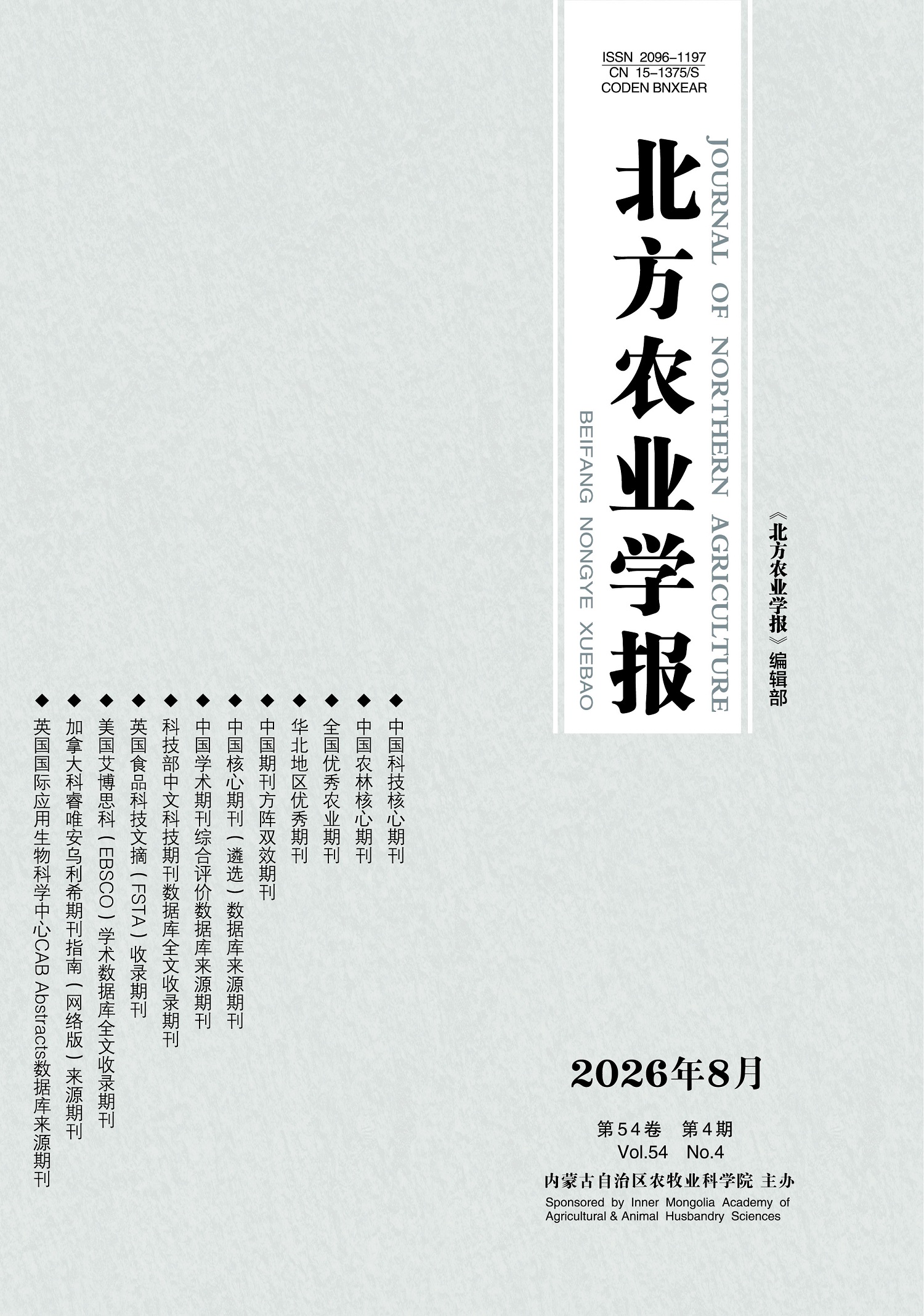
ISSN 2096-1197
CN 15-1375/S
CODEN BNXEAR
chief editor: ZHAO Jun
Responsible Unit: Inner Mongolia Academy of Agricultural and Animal Husbandry Sciences
Sponsor Unit: Inner Mongolia Academy of Agricultural and Animal Husbandry Sciences
Editing Unit: Editorial Department of Journal of Northern Agriculture
Address: Inner Mongolia Academy of Agricultural and Animal Husbandry Sciences,22 Zhaojun Road,Hohhot,China
E-mail: bfnyxb@126.com