Please wait a minute...
Table of Content
20 June 2026, Volume 54 Issue 3
For Selected: View Abstracts Toggle Thumbnails
  • Crop genetics and breeding·Molecular biology
    Improvement of aroma traits in Qianjing 184 via CRISPR/Cas9-mediated editing of Badh2 gene
    LI Fan, CHEN Chun, GUO Xinya, WANG Feifei, SHI Yuliang, CHEN Weijun
    2026, 54(3):  1-12.  doi:10.12190/j.issn.2096-1197.2026.03.01
    Abstract ( 33 )   PDF (6938KB) ( 5 )   Save
    References | Related Articles | Metrics
    【Objective】To improve the aroma traits of self-bred high-quality japonica rice Qianjing 184 and further enhance its eating quality.【Methods】The editing site was identified in the third exon sequence of the betaine aldehyde dehydrogenase homologue 2(Badh2) gene. The CRISPR/Cas9 elements were constructed and introduced into the calli of Qianjing 184 via Agrobacterium-mediated transformation. The Badh2 mutant lines with different mutation types were obtained and the aroma traits and key agronomic traits of the homozygous mutants were detected and analyzed.【Results】A total of thirteen T0 generation mutant lines were obtained by targeted editing of Badh2 in Qianjing 184 using CRISPR/Cas9 system. After genetic purification,four T1 homozygous mutant lines(Badh2-1,Badh2-2,Badh2-3,Badh2-4) without CRISPR/Cas9 editing elements were obtained. Compared with wild-type Qianjing 184,the Badh2 gene of the four mutant lines carried a 5 bp deletion,1 bp insertion,1 bp deletion and 2 bp deletion,respectively. The results of agronomic trait phenotypic identification showed that except for plant height in Badh2-3,which was significantly lower than that of the wild-type(P<0.05),the plant heights of Badh2-1,Badh2-2,and Badh2-4 showed no significant differences from that of the wild-type(P>0.05);the grain length,grain width,grain number per panicle,1 000-grain weight and seed setting rate of the four mutants were not significantly different from those of the wild-type(P>0.05). After identification,the grains and leaves of the four mutants had obvious aroma,and the content of 2-acetyl-1-pyrroline in the grains was extremely significantly increased(P<0.01),reaching 1.52,1.40,1.41 and 1.49 mg/kg,respectively,while the wild-type grains and leaves had no aroma.【Conclusion】The four Badh2 mutant lines of Qianjing 184 all exhibit significant aroma enhancement,and the key agronomic traits of the other mutants are not significantly affected except Badh2-3,indicating that targeted editing at this site via CRISPR/Cas9 technology can be applied to improve aroma quality of japonica rice varieties.
    Research progress on genome-wide association study of maize seed vigor traits
    LI Nian, ZHANG Huaqiang, XU Mingjie, HU Bingyan, LU Guangyao, GUO Shulei, WANG Bin, HAN Zanping
    2026, 54(3):  13-22.  doi:10.12190/j.issn.2096-1197.2026.03.02
    Abstract ( 26 )   PDF (906KB) ( 4 )   Save
    References | Related Articles | Metrics
    Identifying the key genes regulating maize seed vigor is of great significance for breeding maize varieties with superior seed vigor. In recent years,genome-wide association study(GWAS) has been widely applied to the research on maize seed vigor traits. This paper reviews the research progress of GWAS in phenotypic traits related to maize seed vigor,summarizes the identified important quantitative trait locus(QTLs) and their candidate genes,analyzes the existing problems and challenges in current research,and outlooks on the research directions of genetic improvement of seed vigor in the future,with the aim to provide references for breeding high-quality maize varieties with superior seed vigor.
    Cloning and induced expression analysis of the SlGNBP2 gene in Spodoptera litura
    XU Yingjie, XU Xiaoxia, JIN Fengliang
    2026, 54(3):  23-36.  doi:10.12190/j.issn.2096-1197.2026.03.03
    Abstract ( 26 )   PDF (7135KB) ( 3 )   Save
    References | Related Articles | Metrics
    【Objective】To reveal the action pattern of the SlGNBP2 gene in the immune response of Spodoptera litura against pathogenic microorganisms.【Methods】The full-length cDNA sequence of SlGNBP2 was obtained by homologous cloning and rapid amplification of cDNA ends (RACE). The structure and evolutionary characteristics of SlGNBP2 were analyzed using bioinformatics software. The relative mRNA expression levels of SlGNBP2 at different developmental stages,in various tissues,and after induction by pathogenic microorganisms in S. litura were detected by quantitative real-time PCR (qRT-PCR).【Results】The cloned SlGNBP2 gene was 1 731 bp in full-length,with an open reading frame (ORF) of 1 431 bp,encoding 476 amino acids. The results of bioinformatics analysis showed that the predicted protein had a conserved glycoside hydrolase domain (Glyco_hydro_16) of the GNBPs family. The results of homology analysis showed that the conserved domain of SlGNBP2 showed high similarity to those of GNBP2 from other Lepidoptera insects,and was likely to possess similar functions. The sequence similarity between SlGNBP2 and TnGNBP2 of Trichoplusia ni was the highest,with a similarity of 56%. The phylogenetic tree indicated that SlGNBP2 was highly homologous to Lepidoptera insects such as T. ni,Manduca sexta and Plutella xylostella,and was in the same evolutionary branch. Among them,SlGNBP2 showed the closest relationship with TnGNBP2 of T. ni,and the two were clustered into one branch. The results of qRT-PCR showed that the expression of the SlGNBP2 gene was detected at different developmental stages of S. litura,and the highest relative expression level was the 4th instar larvae,which was 64.67 times higher than the relative expression level of eggs. The SlGNBP2 gene was expressed in the hemocytes,fat body,midgut,epidermis,head and malpighian tubules of the 4th instar larvae,with predominant expression in the midgut and fat body,which were up-regulated by 12.74-fold and 11.89-fold compared with the relative expression level of the head. The results of pathogenic microorganism induction showed that SlGNBP2 could be up-regulated by Gram-positive bacteria,Gram-negative bacteria and fungi. Among them,compared with the control,the expression of SlGNBP2 in fat body was up-regulated by 14.47-fold after induction by Gram-positive bacteria Bacillus thuringiensis for 24 h.【Conclusion】SlGNBP2 is most sensitive to the induction of Gram-positive bacteria B. thuringiensis,and plays an important role in pattern recognition in the process of immune defense against pathogenic microorganisms in S. litura.
    Crop cultivation
    Promoting effects of soil microorganisms on wheat seed germination under salt stress
    LU Zongqi, ZHI Yuhao, LANG Yuqing, WANG Xiaoyan, SHEN Xiaoying, LU Zhen, YANG Yi, GU Haiping, REN Weizheng
    2026, 54(3):  37-46.  doi:10.12190/j.issn.2096-1197.2026.03.04
    Abstract ( 40 )   PDF (1957KB) ( 2 )   Save
    References | Related Articles | Metrics
    【Objective】To investigate the effects of in situ soil microbial communities on wheat seed germination and seedling growth under salt stress.【Methods】Jimai 22 (J22,a conventional variety) and Jimai 44(J44,a salt-tolerant variety) were used as experimental materials. Three salt concentration gradients were established:0 mmol/L(no stress),75 mmol/L(moderate salt stress),and 200 mmol/L(severe salt stress). At the same time,two treatments were set:inoculation with deionised water(CK) and in situ soil microbial inoculum(microbial inoculation,G). By measuring seed germination rate,germination energy,maximum bud length,main root length,as well as root weight and seedling weight of wheat seedlings,the promoting effects of soil microorganisms on wheat seed germination and seedling growth under salt stress were analyzed.【Results】With the increase of salt concentration,the average germination rates of wheat seed decreased from 97.50% to 62.52%. From no stress to severe salt stress,the average germination energies of the two varieties decreased from 96.66% to 22.97%,the average main root lengths decreased from 13.90 cm to 5.70 cm,and the average seedling weights decreased from 0.16 g to 0.10 g. The germination rates of J44 and J22 seeds under moderate and severe salt stress conditions were 98.34%,66.67%,and 91.67%,55.79%,respectively,with a extremely significant differences between the two varieties(P<0.001). Microbial inoculation promoted wheat seed germination and seedling growth,and the effect was more significant under salt stress conditions. Under severe salt stress,the germination rates of J22 and J44 were 57.06% and 67.98%,the maximum bud lengths were 11.26 cm and 11.32 cm,and the main root lengths were 7.34 cm and 7.33 cm,respectively,all extremely significantly higher than those of CK(P<0.01 or P<0.001);the root weights increased extremely significantly compared with CK,with increases of 162.40% and 93.60%,respectively(P<0.001). Significant or extremely significant positive correlations were observed between germination indicators and seedling growth indicators of wheat(P<0.05 or P<0.01),with the correlation coefficient of 0.819 between germination rate and seedling weight.【Conclusion】Salt stress inhibites wheat seedling growth to a certain extent. The salt-tolerant variety Jimai 44 performes better than the conventional variety Jimai 22. Soil microorganisms can effectively promote seed germination,increase seedling biomass,and help wheat cope with salt stress.
    Performance evaluation of fully biodegradable mulch films and their effects on potato yield
    DU Erxiao, GAO Hongyan, XING Pengfei, MA Ye, LI Yanfang, GAO Yu, ZHANG Peng, LI Huanchun
    2026, 54(3):  47-57.  doi:10.12190/j.issn.2096-1197.2026.03.05
    Abstract ( 33 )   PDF (3517KB) ( 4 )   Save
    References | Related Articles | Metrics
    【Objective】To explore the performance of fully biodegradable mulch films and provide a reference for their application in potato cultivation in the northern foothills of the Yinshan Mountains in Inner Mongolia.【Methods】A plot experiment was adopted and four treatments were set:Shanghai Hongrui fully biodegradable mulch film(HRB,white film),Jinfa science and technology fully biodegradable mulch film(JFB,white film),conventional polyethylene mulch film(PE),and no mulch film(CK). The effects of two fully biodegradable mulch films on the field degradation characteristics,physical and mechanical properties,soil warming and moisture conservation performance,and potato yield formation were analyzed.【Results】Two types of fully biodegradable mulch films showed good physical and mechanical properties,and the HRB and JFB treatments had better effects on soil warming and moisture conservation in the early growth stage of potato. With gradual degradation of the fully biodegradable mulch films,their physical and mechanical properties and soil temperature in the later growth stage of potato decreased gradually,but still met the requirements of temperature,moisture,and mulching during growth and development of potato. Compared with CK,the HRB,JFB,and PE treatments increased the average daily and monthly soil moisture to varying degrees. With increasing mulching time,the HRB and JFB treatments entered an induction period at 50-60 d,and then began to degrade,reaching degradation rates of 86.14% and 83.82%,respectively. As the growth period progressed,the maximum force value and tensile strength of the HRB and JFB treatments decreased to varying degrees compared with CK. Compared with CK,potato yields of the HRB,JFB,and PE treatments increased by 8.82%-29.12%. The yield of the JFB treatment was the highest,at 91.10 t/hm2,and the difference was significant compared with other treatments(P<0.05). The net profit of the HRB,JFB,and PE treatments was significantly higher than that of CK,and the differences among treatments were significant(P<0.05).【Conclusion】The Jinfa science and technology fully biodegradable mulch film performs well in soil warming and moisture conservation,physical and mechanical properties,degradation rate,and potato yield improvement. It can reduce farmland mulch film pollution and is suitable for promotion and application in production.
    Effects of row and plant spacing configuration on Helianthus annuus growth and soil nutrients under intercropping conditions
    KONG Shuo, AN Hao, LIANG Junmei, ZHANG Tingting, LAN Huiqing, HOU Jianwei, BAI Zichen, GUO Xuejiao, WANG Dongping, ZHANG Jun
    2026, 54(3):  58-65.  doi:10.12190/j.issn.2096-1197.2026.03.06
    Abstract ( 35 )   PDF (6080KB) ( 1 )   Save
    References | Related Articles | Metrics
    【Objective】To clarify the effects of adjusting row and plant spacing configuration in Helianthus annuus-Vicia villosa intercropping under equal planting density on H. annuus growth and soil nutrients.【Methods】By increasing row spacing and decreasing plant spacing,planting density was kept constant. Five treatments were set:row spacing 80 cm,plant spacing 60 cm(R80+P60);row spacing 100 cm,plant spacing 52 cm(R100+P52);row spacing 120 cm,plant spacing 45 cm(R120+P45);row spacing 140 cm,plant spacing 40 cm(R140+P40);and row spacing 160 cm,plant spacing 36 cm(R160+P36). The effects of different treatments on H. annuus growth,water use efficiency,soil nutrients,and soil water storage capacity were analyzed. The entropy weight-TOPSIS method was used to select the optimal row and plant spacing configuration.【Results】Under the R100+P52 treatment,H. annuus yield was the highest at 3.54 t/hm2,and was significantly higher than that of other treatments(P<0.05);plant height was the highest(186.11 cm),stem diameter was the largest(2.28 cm),and disc diameter was the largest(19.28 cm);dry matter accumulation was the highest at 11.13 t/hm2;nitrogen,phosphorus,and potassium accumulation in H. annuus were all the highest,at 140.86,29.79,and 208.81 kg/hm2,respectively. Under the R100+P52 treatment,soil available phosphorus,available potassium,and organic carbon contents were higher;soil water storage capacity was the strongest,and H. annuus water use efficiency was the highest. Comprehensive evaluation using the entropy weight-TOPSIS method showed that the ranking of row and plant spacing configurations was R100+P52>R120+P45>R80+P60>R140+P40>R160+P36.【Conclusion】Appropriately increasing row spacing and decreasing plant spacing of H. annuus,and intercropping V. villosa significantly affects H. annuus growth and soil nutrients. The optimal configuration is a row spacing 100 cm and plant spacing 52 cm.
    Soil and fertilizer
    Improvement effects of combined application of biochar and electrolytic manganese industrial residues on saline-alkali soil
    YIN Cuicui, GAO Ruili, XUE Bin, SUN Quan
    2026, 54(3):  66-75.  doi:10.12190/j.issn.2096-1197.2026.03.07
    Abstract ( 29 )   PDF (3164KB) ( 1 )   Save
    References | Related Articles | Metrics
    【Objective】To investigate the improvement effects of single or combined application of corn straw biochar and electrolytic manganese industrial residues(ammonium magnesium manganese sulfate,electrolytic manganese residue and its arsenic-removed product)on saline-alkali soil,and to provide a reference for the resource utilization of such industrial residues.【Methods】The typical moderately alkaline soil from the Yinbei Plain in Ningxia was selected and the soil incubation and leaching experiments were conducted. The following treatments were set up:1% corn straw biochar(BC),0.1% ammonium magnesium manganese sulfate(AMS),1% electrolytic manganese residue(EMR),1% arsenic-removed electrolytic manganese residue(EMRQ),1% corn straw biochar+0.1% ammonium magnesium manganese sulfate(SBC),1% ammonium magnesium manganese sulfate co-pyrolyzed biochar(SBCG),1% corn straw biochar+1% electrolytic manganese residue(EBC),and 1% corn straw biochar+1% arsenic-removed electrolytic manganese residue(EBCQ),with no amendment treatment as the control(CK). The effects of each treatment on soil pH value,sodium adsorption ratio,exchangeable sodium percentage,organic matter content,available nutrient contents and the leaching dynamics of base cations were analyzed.【Results】The AMS treatment exhibited the most obvious effect on reducing soil pH value,with a decrease of 5.0% compared with CK;the sodium adsorption ratio of each treatment was significantly lower than that of CK(P<0.05),with the EMR treatment and AMS treatment showing reductions of 67.7% and 65.3%,respectively;the exchangeable sodium percentage of the BC treatment was the lowest,with a decrease of 55.0% compared with CK. The BC,SBCG,SBC,EBC and EBCQ treatments significantly increased soil organic matter content(P<0.05),with increases ranging from 69.1% to 125.2% compared with CK. In terms of available nutrients,the EBCQ treatment exhibited the highest available phosphorus content,which increased by 35.4% compared with CK;the BC,SBCG,SBC and EBCQ treatments significantly increased the content of available potassium(P<0.05),with increases ranging from 61.3% to 109.7% compared with CK;all treatments significantly increased the content of alkali-hydrolyzable nitrogen(P<0.05),with the EBCQ treatment showing an 11.4% increase compared with CK. The leaching experiment showed that the concentrations of leached cations of the EBCQ treatment significantly increased,with Ca2+ and Mg2+ concentrations being higher than those of CK by 1 756.4% and 1 247.3%,respectively.【Conclusions】The combined application of biochar and electrolytic manganese industrial residues can effectively improve the nutrients of saline-alkali soil and regulate the composition of base cations. The comprehensive effects of 1% corn straw biochar+1% arsenic-removed electrolytic manganese residue treatment is the best.
    Effects of different organic materials combined with chemical fertilizers on yield,quality of mountain-grown Actinidia chinensis Planch. and soil nutrients
    SHAO Faqi, WANG Xiaoya, LI Gaimin, KE Fu, ZHANG Jinchi, ZHANG Wenhui, JIAO Congjian, ZHANG Hui, ZHANG Huihan, HUANG Chen
    2026, 54(3):  76-84.  doi:10.12190/j.issn.2096-1197.2026.03.08
    Abstract ( 33 )   PDF (2715KB) ( 3 )   Save
    References | Related Articles | Metrics
    【Objective】To explore the effects of different organic materials combined with chemical fertilizers on the yield,quality of mountain-grown Actinidia chinensis Planch. and soil nutrients in southern Shaanxi,and to provide a basis for high-quality and high-yield cultivation of mountain-grown A. chinensis Planch..【Methods】Ten-year-old Xuxiang A. chinensis Planch. was used as the experimental material,and five treatments were set up:no fertilization(CK),application of chemical fertilizer alone(F),chemical fertilizer+cow manure+kitchen waste(FCF),chemical fertilizer+cow manure+branches(FCB),chemical fertilizer+kitchen waste+branches(FFB). Earthworms and microbial inoculants were added to each fertilization treatment. The effects of different treatments on leaf growth,fruit yield,quality of mountain-grown A. chinensis Planch. and soil nutrients were analyzed.【Results】The contents of total nitrogen,total phosphorus and total potassium in leaves and fruits of each treatment were significantly higher than those of CK(P<0.05);among them,FCF treatment was the best,which was 58.89%,68.42%,49.31% and 60.00%,59.09%,44.05% higher than CK,respectively. The fresh weight per 100 leaves,dry weight per 100 leaves,water content,leaf area,thickness per 100 leaves and SPAD value in leaves of each treatment were significantly higher than those in CK(P<0.05),and FCF treatment was the best. The single fruit weight,yield per plant,firmness,soluble sugar content,sugar-acid ratio,soluble solid content,vitamin C content and fruit shape index of A. chinensis Planch. in each treatment were significantly higher than CK(P<0.05);among them,the comprehensive effect of FCF treatment was the best,which was 65.97%,56.04%,30.80%,50.06%,65.39%,42.22%,51.11% and 5.60% higher than CK,respectively. The yields and profits of F,FCF,FCB and FFB treatments were higher than those of CK,and the FCF treatment was the best,which was 31.31 t/hm2 and 187 500 yuan/hm2,respectively. All treatments significantly increased soil nutrient content;among them,FCF treatment had the best effect and the contents of soil organic matter,alkali-hydrolyzable nitrogen,available phosphorus and available potassium in 0-20 cm soil layer increased by 79.87%,67.37%,131.21% and 89.56%,respectively,compared with CK.【Conclusion】Chemical fertilizer+cow manure+kitchen waste treatment,together with the addition of earthworms and microbial inoculants,can achieve high quality and high yield of mountain-grown A. chinensis Planch.,increase economic benefits and improve soil fertility. It is a suitable cultivation and fertilization regime for high quality and high yield of mountain-grown A. chinensis Planch. in southern Shaanxi.

    Effects of ginger planting years on soil nutrients,heavy metal contents,and yield
    SUN Hongquan, CAO Xiuhua, ZHANG Chuanwei, WEI Fankai, LI Yang, ZHANG Jingzhi, LU Hongsheng
    2026, 54(3):  85-92.  doi:10.12190/j.issn.2096-1197.2026.03.09
    Abstract ( 26 )   PDF (1842KB) ( 1 )   Save
    References | Related Articles | Metrics
    【Objective】To explore the effects of ginger planting years on soil nutrients,heavy metal contents and yield in Shandong Province.【Methods】Soil samples were collected from ginger fields planted for 1 year,2 years,3 years and ≥4 years. Soil nutrient content,heavy metal contents and ginger yield were determined,and the correlations between different planting years and soil nutrient as well as yield was analyzed.【Results】Compared with soils planted for 1 year,the contents of soil total nitrogen and hydrolyzable nitrogen in soils planted for ≥4 years were significantly increased by 36.36% and 41.71%,respectively(P<0.05),the exchangeable calcium content decreased by 23.04%,while the available sulfur content increased by 6.07%. The contents of available molybdenum,available copper and available iron in soils planted for ≥4 years were the highest,which were 0.15,3.06 and 51.10 mg/kg,respectively;the contents of available boron and available manganese in soils planted for 2 years were the highest,which were 0.59 and 19.12 mg/kg,respectively;the contents of mercury,arsenic,lead,cadmium and chromium in soil slightly accumulated,but there were no significant difference among different years. With the increase of planting years,the yield of ginger increased first and then decreased,with the highest yield in soil planted for 2 years,reaching 134.49 t/hm2. Different planting years showed extremely significant positive correlations with the total nitrogen content and the available copper content(P<0.01),and a significant positive correlation with the available iron content(P<0.05).【Conclusion】With the increase of planting years,the soil nutrients gradually tended to be balanced,the soil fertility gradually increased,with the highest ginger yield in soils planted for 2 years.
    Research progress on the preparation and negative carbon benefits of corn straw biochar-based fertilizers
    ZHANG Yongshuai, WANG Zhiwei, CHEN Gaofeng, GUO Na, ZHANG Liya
    2026, 54(3):  93-100.  doi:10.12190/j.issn.2096-1197.2026.03.10
    Abstract ( 22 )   PDF (902KB) ( 1 )   Save
    References | Related Articles | Metrics
    Agricultural greenhouse gas emissions are one of the important factors contributing to the intensification of global climate change. The preparation of novel fertilizers with biochar as a functional carrier has become an innovative technology for synergistically improving crop yield and restoring soil ecological functions. China possesses abundant corn straw resources and the conversion of corn straw into biochar-based fertilizers through a pyrolysis process has broad application prospects for promoting the development of green agriculture. This paper systematically reviews the technical development status of corn straw biochar-based fertilizers in recent years,with particular emphasis on the preparation and optimization of corn straw biochar-based fertilizers and their negative carbon benefits. Finally,in view of the existing problems,the future research directions and application prospects are discussed,with the aim to provide references for promoting the green transformation of agriculture and achieving the goals of “dual carbon”.
    Plant protection·Horticulture
    Preparation and application effects of microbial seed coating agents for wheat seeds
    JIANG Yingying, ZHANG Tianjiao, SU Shaofeng, HAO Guang, WEI Shuli, SHI Gongfu, ZHANG Wei, LIU Boying, ZHAO Xiaoqing, LU Zhanyuan
    2026, 54(3):  101-109.  doi:10.12190/j.issn.2096-1197.2026.03.11
    Abstract ( 26 )   PDF (2472KB) ( 5 )   Save
    References | Related Articles | Metrics
    【Objective】To investigate the preparation and application effects of compound microbial seed coating agents for wheat seeds,providing a reference for the development of highly active compound microbial seed coating agents.【Methods】Wheat seeds were used as experimental materials. Two treatments were set up:compound microbial seed coating agent 1(Bacillus velezensis SSF6+B. subtilis LU5)and compound microbial seed coating agent 2(B. velezensis SSF6+B. subtilis LU5+Trichoderma longibrachiatum),and distilled water was used as the control(CK). Seed coating agents and coated seeds were prepared. The physicochemical properties of different compound microbial seed coating agents and their effects on wheat germination rate and seedling growth were determined,and the optimal composition and ratio of the compound microbial seed coating agents were screened.【Results】The optimal properties of two compound microbial seed coating agents were:pH 7.38-7.39,coating uniformity≥90%,shedding rate<8%,and good stability at low temperature(4 ℃)and heat storage(54 ℃),all in compliance with relevant standards. The germination rates of wheat seeds treated with both compound microbial seed coating agents were significantly higher than that of CK(P<0.05). Compound microbial seed coating agent 1 had the highest germination rate at an agent-to-seed ratio of 1∶75,and compound microbial seed coating agent 2 had the highest germination rate at an agent-to-seed ratio of 1∶50,with an increase of 52.98% and 56.39%,respectively,compared with CK. Pot experiments showed that both compound microbial seed coating agents promoted wheat seedling growth. Compared with CK,aboveground seedling height and belowground root length of compound microbial seed coating agent 1 increased by 17.54% and 16.90%,respectively;belowground dry weight,aboveground dry weight,and root-to-shoot ratio increased by 25.00%,21.05%,and 6.68%,respectively;aboveground seedling height and belowground root length of compound microbial seed coating agent 2 increased by 25.73% and 25.35%,respectively;belowground dry weight,aboveground dry weight,and root-to-shoot ratio increased by 62.50%,47.37%,and 21.69%,respectively.【Conclusion】B. velezensis SSF6+B. subtilis LU5+T. longibrachiatum at an agent-to-seed ratio of 1∶50 shows stability and growth-promoting ability,can improve wheat germination rate,and may serve as a superior seed coating agent for wheat seeds.
    Analysis of anthocyanins and carotenoids contents in Paeonia lactiflora with different color series
    MA Tao, ZHAO Zhonghua, YUAN Mingxia, LIU Huanhuan, XIA Bing, QIU Kuanbiao, SHEN Shixiong, CUI Xinyan
    2026, 54(3):  110-118.  doi:10.12190/j.issn.2096-1197.2026.03.12
    Abstract ( 31 )   PDF (3909KB) ( 2 )   Save
    References | Related Articles | Metrics
    【Objective】To analyze the contents of anthocyanins and carotenoids in Paeonia lactiflora of different color series,and to provide a reference for the breeding of superior varieties of P. lactiflora.【Methods】Twelve P. lactiflora varieties were used as experimental materials. The flower colors of P. lactiflora was classified by the Munsell color system,and the contents of anthocyanins and carotenoids were determined by high-performance liquid chromatography.【Results】The twelve P. lactiflora varieties were classified into four color series:yellow,red,purple and white. The contents of anthocyanins and carotenoids in the petals of P. lactiflora from different color series were significantly different. The content of peonidin-3-O-glucoside was highest in the red series variety Red Charm(95 575.1 ng/g),while the cyanidin content was highest in the red series variety Golden Sunshine(60 987.1 ng/g). The total anthocyanin content in the yellow series was generally low(3 810.8-26 755.6 ng/g). In the red series,lutein content was highest in Coral(37.55 μg/g). In the purple series,lutein content was highest in Red Fuji(124.86 μg/g),and β-carotene content was highest in Oriental Girl(1.49 μg/g). In the white series variety Shy Queen,pelargonidin,pelargonidin-3-O-glucoside,α-carotene,and zeaxanthin were absent,and the β-carotene content was low(0.20 μg/g).【Conclusion】Differences in the types,contents,and proportions of anthocyanins and carotenoids collectively contribute to the formation of flower color in P. lactiflora. Anthocyanin monomers content in yellow series P. lactiflora are distributed relatively evenly;peonidin-3-O-glucoside and cyanidin are the main coloring factors in red series P. lactiflora;lutein and β-carotene have a synergistic effect on purple coloration;and white series P. lactiflora are relatively absent in both anthocyanins and carotenoids.
    Agricultural information technology
    Research status and visualization analysis of the bZIP gene family based on bibliometrics
    LI Zimo, WANG Xiaorui, XIA Ziyu, HE Han, CAI Xinghang, HUANG Wenjing, SUN Xiaochun
    2026, 54(3):  119-134.  doi:10.12190/j.issn.2096-1197.2026.03.13
    Abstract ( 26 )   PDF (10210KB) ( 4 )   Save
    References | Related Articles | Metrics
    【Objective】To understand the research status and progress of the bZIP gene family,and to identify its research hotspots and future trends.【Methods】Relevant literature in the Web of Science collection and CNKI database were retrieved. CiteSpace 6.4.R1,VOSviewer 1.6.20 and other software were used for statistical analysis and visualization analysis from multiple perspectives,including annual publication volume,research institutions,core authors,disciplinary and journal distribution,and keywords frequency.【Results】A total of 1 000 English articles and 350 Chinese articles were included;the annual publication volume showed an increasing trend;the results of the author collaboration analysis showed that the author collaboration within the same institution were frequent,and cross-institutional and cross-national collaboration were increasing. Among the research institutions,Chinese Academy of Agricultural Sciences and Nanjing Agricultural University published the most articles,with 58 and 48 articles respectively. The research literature of bZIP gene family in China from 2001 to 2025 was mainly published in five core journals such as Molecular Plant Breeding (40 articles). Transcriptional regulation and abiotic stress response were the core research themes in both Chinese and English literature.【Conclusions】Research on the bZIP gene family continues to receive global attention. Abiotic stress is the core research direction,and its functional characterization and regulatory mechanisms are the focus of future research.
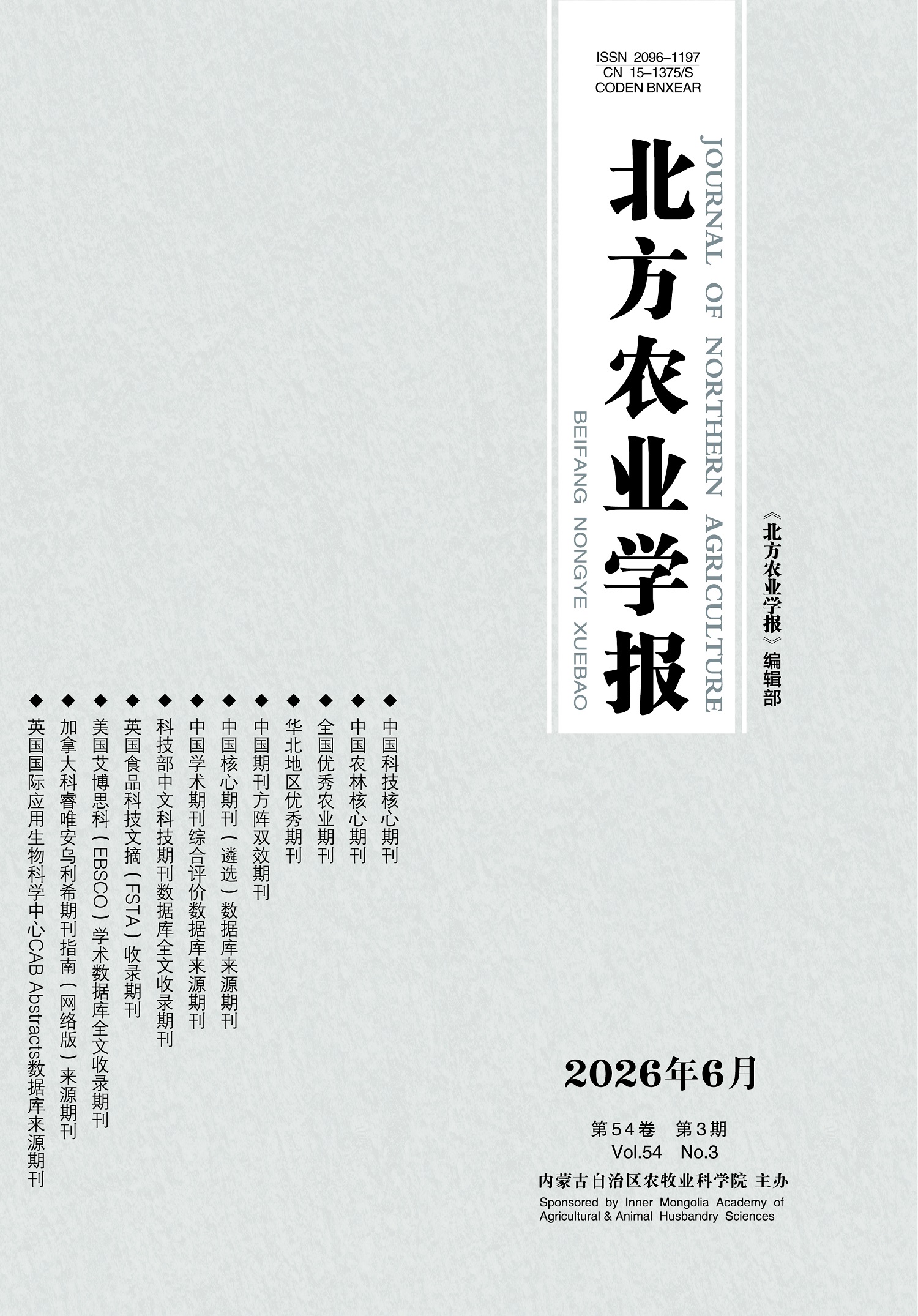
ISSN 2096-1197
CN 15-1375/S
CODEN BNXEAR
chief editor: ZHAO Jun
Responsible Unit: Inner Mongolia Academy of Agricultural and Animal Husbandry Sciences
Sponsor Unit: Inner Mongolia Academy of Agricultural and Animal Husbandry Sciences
Editing Unit: Editorial Department of Journal of Northern Agriculture
Address: Inner Mongolia Academy of Agricultural and Animal Husbandry Sciences,22 Zhaojun Road,Hohhot,China
E-mail: bfnyxb@126.com