Please wait a minute...
Table of Content
20 June 2025, Volume 53 Issue 3
For Selected: View Abstracts Toggle Thumbnails
  • Corp cultivation·Soil and fertilizer
    Effects of straw returning and plastic film mulching on water use efficiency and yield of mung bean
    FAN Yafang, LIU Jian, CHEN Wenjin, HE Xiaoyong, CHENG Yuchen, KONG Qingquan, GAO Xuefeng, GUO Jianbing
    2025, 53(3):  1-10.  doi:10.12190/j.issn.2096-1197.2025.03.01
    Abstract ( 69 )   PDF (975KB) ( 22 )   Save
    References | Related Articles | Metrics
    【Objective】To determine the effects of straw returning and plastic film mulching on the water use efficiency and yield of mung bean.【Methods】Using mung bean variety Mengkelyu No. 4 as the test material,four treatments were set up:straw returning combined with plastic film mulching(SP),straw returning alone(S),plastic film mulching alone(P),and no straw returning with no plastic film mulching(NSP,CK). The effects of straw returning and plastic film mulching on soil bulk density,soil porosity,soil water content,soil water storage,as well as water use efficiency,root architecture,yield and its components of mung bean were analyzed.【Results】Under the SP treatment,soil bulk density was significantly lower than that of other treatments(P<0.05),which decreased by 11.89% compared with the NSP treatment after harvest. Soil porosity,soil water content,and soil water storage were significantly higher than those of other treatments(P<0.05),increasing by 6.48 percentage points,5.20 percentage points,and 13.29% compared with the NSP treatment after harvest,respectively. Under the SP treatment,the root architecture indices,plant dry matter weight,and yield-related indices of mung bean were all significantly higher than those of other treatments(P<0.05). Compared with the NSP treatment,the total root length,total root surface area,and total root volume of mung bean increased by 42.02%,28.04%,and 22.63%,respectively. Compared with the NSP treatment,the water use efficiency,plant dry matter weight,number of pods per plant,number of seeds per pod,100-seed weight,and yield of mung bean increased by 27.72%,40.68%,14.82%,11.72%,19.19%,and 24.08%,respectively.【Conclusion】Compared with straw returning alone or plastic film mulching alone,straw returning combined with plastic film mulching can significantly improve soil physical properties,enhance soil water storage and moisture retention capacity,promote the growth and development of mung bean roots,increase plant dry matter weight,and ultimately improve mung bean yield and water use efficiency.
    Effects of nitrogen fertilizer management on photosynthetic characteristics and yield of foxtail millet under ridge-furrow cropping in the semi-arid hilly region of Yanshan Mountains
    LI Jiaqi, WU Xiaorong, WANG Ying, ZHAO Xinyao, ZHANG Hongjie, YANG Jinhu, HAN Li, HAN Xue, GUO Xiaonan, LI Lijun
    2025, 53(3):  11-25.  doi:10.12190/j.issn.2096-1197.2025.03.02
    Abstract ( 43 )   PDF (1677KB) ( 12 )   Save
    References | Related Articles | Metrics
    【Objective】To investigate the effects of nitrogen fertilizer management on the photosynthetic characteristics and yield of foxtail millet under ridge-furrow cropping in the semi-arid hilly region of the Yanshan Mountains,providing a reference for efficient fertilization strategies in foxtail millet cultivation in this area.【Methods】A two-factor field experiment was conducted in Songshan District and Ongniud Banner of Chifeng City,Inner Mongolia,from 2023 to 2024 to investigate the effects of five fertilization methods:no nitrogen fertilizer(F0),one nitrogen application(pre-sowing,F1),two nitrogen applications(pre-sowing and jointing stage,F2),three nitrogen applications(pre-sowing,jointing stage,and heading stage,F3),and four nitrogen applications(pre-sowing,jointing stage,heading stage,and flowering stage,F4) on photosynthetic indices,agronomic traits,and yield of foxtail millet under ridge-furrow cropping(D) and flat cropping(N) patterns,and to analyze the sources of nitrogen fertilizer contributions to yield increase under ridge-furrow cropping pattern. 【Results】Compared with the F0 treatment,the F3 treatment under the ridge-furrow cropping pattern increased the SPAD value and net photosynthetic rate of flag leaves in the late growth stage of foxtail millet;under both cropping patterns,the F3 and F4 treatments increased the flag leaves stomatal conductance(Gs),intercellular CO2 concentration(Ci),and transpiration rate(Tr),and improved the photosynthetic capacity of foxtail millet in the late growth stage. In 2023,the F3 treatment under the ridge-furrow cropping pattern increased the plant height,stem diameter,and panicle length of foxtail millet;in 2024,compared with the flat cropping pattern,the F3 treatment under the ridge-furrow cropping pattern increased the plant height,stem diameter,panicle length,and panicle diameter of foxtail millet by 0.54%,10.78%,1.21%,and 5.15%,respectively. During the two years,the F3 treatment showed the highest contribution rate of nitrogen application to yield,which was 22.12% and 39.29% respectively;the contribution rate of cropping pattern showed no significant differences among the fertilization treatments(P>0.05),and the contribution rate of nitrogen management to foxtail millet yield increase was greater than that of cropping pattern. 【Conclusion】Under the ridge-furrow cropping pattern,three nitrogen applications(pre-sowing,jointing stage and heading stage) can better meet the nitrogen demand of foxtail millet in the late growth stages,enhance chlorophyll content and net photosynthetic rate at different growth stages,thereby increasing yield,and can serve as an optimal nitrogen fertilization strategy for high-yield foxtail millet production in the semi-arid hilly region of the Yanshan Mountains.
    Effects of nitrogen application and stubble returning on barley yield,quality and soil nutrients
    QU Jiahui, Batu, XU Guangxiang, CHEN Ruiying, LYU Ersuo, MA Yu, LI Tao, WANG Li, LIU Zhiping
    2025, 53(3):  26-34.  doi:10.12190/j.issn.2096-1197.2025.03.03
    Abstract ( 50 )   PDF (948KB) ( 17 )   Save
    References | Related Articles | Metrics
    【Objective】To investigate the effects of different nitrogen application rates and stubble returning on barley yield,quality,and soil nutrients.【Methods】Using the barley variety Neinongke Forage Barley No. 1 as the experimental material,three nitrogen application levels were set:0 kg/hm2(N0),75 kg/hm2(N1),and 150 kg/hm2(N2). For each nitrogen level,two treatments were designed:stubble returning(S) and no stubble returning(N). The effects of the treatments on subsequent barley yield,quality,and soil nutrients were analyzed.【Results】 Under stubble returning,the fresh grass yield of the N2 treatment increased significantly by 32.60% compared with the N0 treatment(P<0.05). For both stubble returning and no stubble returning treatments,the dry hay yield followed the order N2>N0>N1,with no significant differences(P>0.05). After stubble returning,the crude protein content of the N2 and N1 treatments increased significantly by 1.10 and 0.95 percentage points respectively,compared with the N0 treatment(P<0.05);the relative feed value(RFV)of the N2 treatment was 4.67 and 13.50 percentage points higher than that of the N1 and N0 treatments,respectively;differences in crude protein content,crude fat content,and RFV between the N1 and N2 treatments were not significant(P>0.05). After stubble returning,the soil total nitrogen content of the N1 treatment was significantly higher than that of the N0 treatment by 23.78%(P<0.05),while the alkali-hydrolyzable nitrogen content of the N1 and N2 treatments increased significantly by 22.69% and 26.53%,respectively,compared with the N0 treatment(P<0.05),with no significant difference between the N1 and N2 treatments(P>0.05);the soil total phosphorus content of the N2 treatment increased significantly by 30.38% and 53.78% compared with the N1 and N0 treatments,respectively(P<0.05);the soil available phosphorus content followed the order N2>N1>N0,with no significant differences(P>0.05);the soil total potassium content followed the order N2>N1>N0,with the N2 treatment significantly higher than the N0 treatment by 37.28%(P<0.05),but no significant difference between the N2 and N1 treatments(P>0.05);the available potassium content in the N1 treatment was significantly higher than in the N0 and N2 treatments(P<0.05);the soil organic matter content in the N1 and N2 treatments increased significantly by 20.05% and 23.04%,respectively,compared with the N0 treatment(P<0.05). Fresh grass yield was significantly and positively correlated with soil total phosphorus content and total potassium content(P<0.05),while dry hay yield was significantly and positively correlated with soil total nitrogen content and total phosphorus content(P<0.05).【Conclusion】Considering the cost of nitrogen fertilizer,stubble returning with a nitrogen application rate of 75 kg/hm2 effectively enhanced barley yield and quality and improved soil physicochemical properties.
    Physiology and biochemistry·Plant protection
    Effects of castor cake meal fertilizer on soil nutrients and enzyme activities in Cerasus humilis
    LI Mingjing, HE Zhibiao, QIAO Wenjie, JIA Juanxia, Modeletu, ZHANG Zhiyong, LEI Fengyan, WANG Guocheng, ZHANG Xiaohua, HUANG Fenglan
    2025, 53(3):  35-46.  doi:10.12190/j.issn.2096-1197.2025.03.04
    Abstract ( 43 )   PDF (1405KB) ( 10 )   Save
    References | Related Articles | Metrics
    【Objective】To investigate the effects of castor cake meal fertilizer on soil nutrients and enzyme activities in Cerasus humilis,providing a novel fertilization strategy for its cultivation.【Methods】Using the Cerasus humilis cultivar Jing'ou as the experimental material,a randomized block design was employed with no fertilization as the control(CK)and treatments including chemical fertilizer(F),cattle manure(N),and castor cake meal fertilizer(B1,B2,B3,B4). The effects of these treatments on soil nutrients and enzyme activities were analyzed.【Results】Compared with CK,soil pH value in treatments B1,B2,and B3 significantly decreased by 2.1%,3.4%,and 1.2%,respectively,and was significantly lower than in treatments N and F(P<0.05). Soil organic matter content in treatments B2 and B4 increased by 19.2% and 16.8%,respectively,compared with CK. Soil total nitrogen content in treatments B2,B3,and B4 was significantly higher than in treatments F and N by 17.3%-24.8% and 4.4%-11.0%,respectively(P<0.05). Soil total phosphorus content in treatment B3 was significantly higher than in treatments F and N by 20.7% and 14.7%,respectively(P<0.05). Soil alkali-hydrolyzable nitrogen content in treatments B1,B2,and B4 increased by 22.4%-39.4% and 2.0%-16.2% compared with treatments F and N,respectively. Soil alkaline phosphorus content in treatments B1,B2,B3,and B4 was significantly higher than in treatments F and N by 26.7%-193.4% and 15.4%-163.2%,respectively(P<0.05). Soil available potassium content in treatments B1,B2,B3,and B4 increased by 12.7%-60.6% and 15.9%-65.2% compared with treatments F and N,respectively. Application of castor cake meal fertilizer significantly enhanced the activities of soil urease,acid phosphatase,acid protease,acid invertase,sucrase,N-acetylglucosaminidase,and leucine aminopeptidase,while reducing soil nitrate reductase activity. Pearson correlation analysis revealed varying degrees of correlation between soil nutrients and enzyme activities.【Conclusion】The application of castor cake meal fertilizer improved the physicochemical properties of Cerasus humilis soil. Compared with chemical fertilizer and cattle manure,castor cake meal fertilizer effectively regulated soil pH value,increased soil nutrient content,and enhanced soil enzyme activity to varying extents.
    Study on the field occurrence dynamics and selectivity of Frankliniella intonsa on sunflower
    SU Yajie, WU Xuerui, DU Lei, TIAN Xiaoyan, KANG Wenqin, GUO Chen, ZHANG Wenbing, WU Zhanmin, ZHANG Jian, YUN Xiaopeng
    2025, 53(3):  47-53.  doi:10.12190/j.issn.2096-1197.2025.03.05
    Abstract ( 48 )   PDF (926KB) ( 8 )   Save
    References | Related Articles | Metrics
    【Objective】To investigate the field occurrence dynamics of Frankliniella intonsa and its selectivity for different parts of sunflower plants,aiming to provide a theoretical basis for the control of F. intonsa in sunflower fields. 【Methods】Using sunflower variety SH361 as the test material,yellow and blue sticky traps were adopted to monitor the field occurrence dynamics of F. intonsa. With sunflower varieties SH363 and Sanrui No. 3 as test materials,seeds,ray florets,floral leaves,leaves,and disk florets were selected and placed in petri dishes with moist filter paper,followed by the introduction of F. intonsa. The feeding preference of F. intonsa was observed at 6,7,8,and 24 h respectively. In fields with severe F. intonsa infestation,seeds,ray florets,floral leaves,leaves,and disk florets were collected and adult F. intonsa were removed. After the samples were cultured in a climate chamber,the number of hatched nymphs and oviposition preference were observed,and the number of eggs laid was calculated. 【Results】The population trends of F. intonsa on yellow and blue sticky traps in sunflower fields were consistent,with the population showing a fluctuating change from late June to late August. Specifically,from 29 June to 13 July,the population initially increased and then declined,it reached a low point by late July,followed by a rapid increase in early August,peaking again on 17 August. Ray florets were the most preferred site for both feeding and oviposition of F. intonsa,and the oviposition preference for ray florets was significantly higher than that for other parts(P<0.05),with the number of eggs laid of 5.17 and 2.50 individuals per petri dish on SH363 and Sanrui No. 3,respectively.【Conclusion】The population of F. intonsa increases sharply when sunflowers enter the flowering stage in mid-August,and ray florets are the most preferred site for both feeding and oviposition of F. intonsa.
    Study on the prevention and control efficacy of Atailing against potato mosaic virus disease
    ZHANG Zhifang, DONG Lisheng, XIE Guohua, WANG Ying, LIU Yongliang, ZHANG Lei, MA Manping, XU Limin
    2025, 53(3):  54-59.  doi:10.12190/j.issn.2096-1197.2025.03.06
    Abstract ( 51 )   PDF (575KB) ( 9 )   Save
    References | Related Articles | Metrics
    【Objective】To evaluate the prevention and control efficacy of Atailing against potato mosaic virus disease and to provide a reference for its application in potato production.【Methods】Field experiments were conducted during 2023—2024 in Qahar Youyi Front Banner(Ulanqab,Inner Mongolia) and Wuchuan County(Hohhot,Inner Mongolia) using a randomized block design. Four concentration gradient treatments of Atailing solutions(800-fold,1 000-fold,1 300-fold,and 1 500-fold dilutions) were tested,with water spray as the control(CK). The first application was carried out when potato seedlings reached 10-15 cm in height,followed by spraying once every 7-10 d,with a total of 3 applications. The prevention and control efficacy of Atailing against potato mosaic virus disease was then analyzed.【Results】Spraying Atailing was safe for potato plant growth. The 800-fold and 1 000-fold dilutions significantly reduced the incidence rate and disease index of potato mosaic virus disease(P<0.05),showing stable and superior control efficacy. The control efficacy of 800-fold dilution of Atailing on potato mosaic virus disease reached 81.8%-84.7%,with a yield of 31 788.0-36 693.0 kg/hm2;the control efficacy of 1 000-fold dilution of Atailing on potato mosaic virus disease reached 80.0%-81.7%,with a yield of 31 034.3-33 963.8 kg/hm2.【Conclusion】Application of Atailing at 800-fold or 1 000-fold dilutions when potato seedlings are 10-15 cm in height can significantly reduce the incidence of potato mosaic virus disease and effectively improve potato yield.
    Resistance of Amaranthus retroflexus L. and Chenopodium album L. to fomesafen in soybean fields of Nenjiang City
    GUO Xiaotong, GUO Yulian, WANG Yu, LUO Chan, CONG Keqiang
    2025, 53(3):  60-75.  doi:10.12190/j.issn.2096-1197.2025.03.07
    Abstract ( 48 )   PDF (1662KB) ( 6 )   Save
    References | Related Articles | Metrics
    【Objective】To determine the resistance levels and distribution of the broadleaf weeds Amaranthus retroflexus L. and Chenopodium album L. to fomesafen in soybean fields of Nenjiang City,Heilongjiang Province.【Methods】Seeds of A. retroflexus L. and C. album L. were collected from 10 towns,including Nenjiang Town,Haijiang Town,Qianjin Town etc. The resistance levels of weeds of A. retroflexus L. and C. album L. to fomesafen were determined using a whole-plant bioassay. The mechanisms underlying resistance in A. retroflexus L. were investigated through sequence amplification and alignment of the target gene PPX2 and other related methods.【Results】After treatment with different doses of fomesafen,the GR50 values for 30 collected A. retroflexus L. populations ranged from 8.70 to 814.77 g a.i./hm2,with resistance indices(RI)of 17.8 to 93.6. Fourteen populations exhibited low-level resistance,primarily collected from Lianxing Township,Yilaha Town,and Taxi Township; ten populations showed moderate-level resistance,mainly from Shuangshan Town,Changfu Town,and Keluo Town; and two populations displayed high-level resistance,primarily from Haijiang Town. Target gene detection revealed that all 26 resistant A. retroflexus L. populations had an Arg-128Gly mutation in the PPX2 gene. A single resistant population of A. retroflexus L. R was selected and treated with P450 and GST inhibitors,resulting in a significant reduction of RI,indicating the presence of non-target-site resistance. After treatment with varying doses of fomesafen,the GR50 values of 26 collected C. album L. populations ranged from 51.54 to 497.10 g a.i./hm2,with RI of 1.0 to 9.5. Ten populations exhibited low-level resistance,six showed moderate-level resistance,and no high-level resistant populations to fomesafen were identified. Resistant C. album L. populations to fomesafen were primarily collected from Linjiang Township,Changfu Town,and Keluo Town.【Conclusion】A. retroflexus L. and C. album L. in Nenjiang City,Heilongjiang Province,have developed different levels of resistance to fomesafen,with A. retroflexus L. exhibiting both target-site resistance and non-target-site resistance to fomesafen.
    Water-saving irrigation·Horticulture
    Effects of drip irrigation hole depth on soil moisture and apple tree growth
    LUO Dong, ZOU Chaoyu, BAI Gangshuan, LI Haiping, BIAN Lijun
    2025, 53(3):  76-86.  doi:10.12190/j.issn.2096-1197.2025.03.08
    Abstract ( 46 )   PDF (1975KB) ( 8 )   Save
    References | Related Articles | Metrics
    【Objective】To improve the drip irrigation performance of apple orchards on the Weibei Dry Plateau and provide a simple method for water-saving irrigation.【Methods】Surface drip irrigation was used as the control,and treatments with drip irrigation holes at depths of 15,30,and 45 cm were designed. The effects of different drip irrigation hole depths on soil moisture in the 0-100 cm soil layer during various growth stages of apple trees,as well as on the root system,fruit yield and quality,and shoot growth of apple trees,were monitored.【Results】Compared with surface drip irrigation,during the flower bud differentiation stage of apple trees,the soil moisture in the 0-60 cm soil layer under the treatments of 15,30,and 45 cm deep drip irrigation holes increased by 3.95%,4.45%,and 5.28%,respectively. After fruit harvest,in the 60-100 cm soil layer,the root fresh biomass density of absorbent roots and conducting roots of apple trees under the 15,30,and 45 cm deep drip irrigation hole treatments increased by 16.09%,51.72%,60.92% and 41.38%,149.69%,391.07%,respectively;the root length density increased by 19.23%,61.54%,76.92% and 19.60%,46.43%,28.94%,respectively;the root surface area density increased by 21.50%,67.45%,51.84% and 20.30%,54.78%,42.21%,respectively. Apple fruit yields under the 15,30,and 45 cm deep drip irrigation hole treatments were 8.00%,12.27%,and 4.80% higher than under surface drip irrigation,respectively,with single fruit weights increasing by 7.77%,9.43%,and 4.51%,respectively;however,no significant effects on fruit quality were observed. Compared with surface drip irrigation,the total number of one-year-old shoots of apple trees under the 15 and 30 cm deep drip irrigation hole treatments increased significantly by 7.42% and 8.99%(P<0.05),while the total number of one-year-old shoots under the 45 cm deep drip irrigation hole treatment decreased extremely significantly by 13.51%(P<0.01).【Conclusion】Drip irrigation holes at different depths can all increase soil moisture,induce the root system of apple trees to distribute to the deep soil layer,promote root growth and development,and improve single fruit weight and fruit yield. Among all treatments,a drip irrigation hole depth of approximately 30 cm is the most suitable for apple orchards on the Weibei Dry Plateau.

    Physiological responses and cold tolerance evaluation of Phalaenopsis under low-temperature stress
    WANG Shiyao, YANG Shucai, JIANG Shuanli, WANG Ruihua, ZHANG Guo, WANG Jun, FENG Jian, YANG Lujun, ZHAO Yu'an
    2025, 53(3):  87-92.  doi:10.12190/j.issn.2096-1197.2025.03.09
    Abstract ( 63 )   PDF (799KB) ( 8 )   Save
    References | Related Articles | Metrics
    【Objective】To investigate the physiological responses and differences in cold tolerance among Phalaenopsis under low-temperature stress,and provide support for improving cold-tolerance traits and breeding new cold-tolerant cultivars.【Methods】Three Phalaenopsis cultivars(P. Big Chili,P. Little Gem Stripes,and P. Wedding Promenade) were used as experimental materials and subjected to low-temperature stress(10,5,0 ℃) and non-stressed(CK,25 ℃) conditions. The activities of peroxidase(POD),catalase(CAT),superoxide dismutase(SOD),and the contents of proline(Pro) and malondialdehyde(MDA) in detached leaves under these conditions were measured. The cold tolerance was comprehensively evaluated using the membership function method.【Results】Under low-temperature stress,the physiological responses of the tested Phalaenopsis cultivars differed significantly from those under non-stressed conditions. In the P. Wedding Promenade cultivar,the activities of POD,CAT,SOD,and the contents of Pro and MDA exhibited a gradual decline with decreasing temperature,peaking at 10 ℃ with values of 220.73 U/(g·min),44.00 U/(g·min),261.19 U/g,and 289.31 μg/g,44.00 μmol/g,respectively. For the P. Big Chili and P. Little Gem Stripes cultivars,the activities of POD,CAT,SOD,and the contents of Pro and MDA exhibited an initial increase followed by a decrease,all peaking at 5 ℃. The comprehensive membership function values for P. Wedding Promenade,P. Big Chili,and P. Little Gem Stripes were 0.540,0.447,and 0.357,respectively.【Conclusion】The three Phalaenopsis cultivars exhibited different levels of tolerance and physiological responses to low-temperature stress,with cold tolerance ranked as P. Wedding Promenade>P. Big Chili>P. Little Gem Stripes,which is consistent with their performance in actual cultivation.
    Agrotechny
    Study on the optimization of extraction process and antibacterial and antioxidant activities of perilla leaf total flavonoids
    XU Menglu, XU Jingkai, QIU Lei, CUI Hanzhang, ZHANG Kaitao, CHEN Feiyu, LUO Jincheng
    2025, 53(3):  93-103.  doi:10.12190/j.issn.2096-1197.2025.03.10
    Abstract ( 53 )   PDF (1602KB) ( 7 )   Save
    References | Related Articles | Metrics
    【Objective】To determine the optimal conditions for ultrasound-assisted ethanol extraction of perilla leaf total flavonoids and to evaluate their antibacterial and antioxidant activities.【Methods】After determining the optimal conditions for each factor through single-factor experiments,response surface methodology was employed to design the extraction process optimization experiment,and the optimal extraction conditions for perilla leaf total flavonoids were determined using Design-Expert 13.0. The antibacterial capacity was assessed using the inhibitory effect on Staphylococcus aureus as an indicator,while antioxidant activity was evaluated through DPPH and ABTS free radical scavenging assays.【Results】Under different factor levels,the extraction yields of perilla leaf total flavonoids reached the highest values of 2.72%,3.20%,2.76%,and 3.02%,respectively,with the ethanol volume fraction of 35%,liquid-to-solid ratio of 15:1(mL:g),ultrasonic power of 300 W,and extraction time of 30 min. After optimization using response surface methodology,the extraction yield of perilla leaf total flavonoids reached a maximum of (3.375±0.098)% under the conditions of 36% ethanol volume fraction,liquid-to-solid ratio of 17:1(mL:g),ultrasonic power of 303 W,and extraction time of 33 min. The obtained perilla leaf total flavonoids extract exhibited a significant inhibition zone against Staphylococcus aureus,with maximum DPPH and ABTS free radical scavenging rates of 97.86% and 95.79%,respectively.【Conclusion】The optimal extraction conditions for perilla leaf total flavonoids are an ethanol volume fraction of 36%,liquid-to-solid ratio of 17:1(mL:g),ultrasonic power of 303 W,and extraction time of 33 min. The perilla leaf total flavonoids demonstrate significant inhibitory effects against Staphylococcus aureus and strong free radical scavenging capacity.
    Research progress on nutritional and bioactive components of Fagopyrum esculentum
    ZHANG Fuxin, HE Lianzhen, MA Nan
    2025, 53(3):  104-109.  doi:10.12190/j.issn.2096-1197.2025.03.11
    Abstract ( 64 )   PDF (725KB) ( 17 )   Save
    References | Related Articles | Metrics
    Fagopyrum esculentum,a plant with both medicinal and edible properties,possesses high nutritional and pharmaceutical value. This paper reviews the research progress on the nutritional components of Fagopyrum esculentum,including proteins,fats,starch,dietary fiber,vitamins,and minerals,as well as its bioactive components,such as flavonoids,sterols,and polyphenols. It also elaborates on the health benefits and current status of development and applications of Fagopyrum esculentum,aiming to provide a reference for establishing a functional Fagopyrum esculentum industry,developing health-functional foods,and enhancing its economic value.
    Agricultural information technology
    Research progress and prospects of the multifunctionality of cultivated land in China
    YANG Huijie, LIU Zixin, HU Huiyong, ZHANG Gengjie
    2025, 53(3):  110-121.  doi:10.12190/j.issn.2096-1197.2025.03.12
    Abstract ( 41 )   PDF (2415KB) ( 17 )   Save
    References | Related Articles | Metrics
    【Objective】To explore the development trajectory,research hotspots,and frontiers of research on the multifunctionality of cultivated land in China.【Methods】Using 300 articles from the China National Knowledge Infrastructure(CNKI) database spanning 2004—2023 as the sample,visualization tools were employed to analyze the basic publication characteristics,research disciplines,research teams,research institutions,keywords centrality,keywords burstiness,research hotspots,and frontiers related to the multifunctionality of cultivated land.【Results】Research on the multifunctionality of cultivated land had attracted increasing scholarly attention in recent years,with the number of documents increasing annually. The research was strongly policy-oriented and had became increasingly diversified. The research field of the multifunctionality of cultivated land involves interdisciplinary integration,including both natural and social sciences,primarily agricultural basic sciences and agricultural economics. Collaboration among authors and institutions exhibits a pattern of small clusters with wide dispersion,with limited cooperation between research teams and a lack of enterprise involvement in research institutions. Current research hotspots include functional transformation,cultivated land use,scale effects,and the entropy weight method. National level funds provide the most support for research on the multifunctionality of cultivated land,accounting for 81% of funded publications.【Conclusion】Research on the multifunctionality of cultivated land is rich and interdisciplinary,yet inter-team collaboration remains limited. In the future,the research on the multifunctionality of cultivated land should be developed from four aspects:establishing a standardized and unified evaluation system for the multifunctionality of cultivated land,developing scientific and efficient assessment methods of the multifunctionality of cultivated land,building a multi-party cooperation platform for information sharing,and strengthening the application of big data and related disciplines in supporting research on the multifunctionality of cultivated land.
    Analysis of the status and research trends of sweet potato fertilization in China
    LIU Xianglin, MAO Wei, CHEN Ming
    2025, 53(3):  122-134.  doi:10.12190/j.issn.2096-1197.2025.03.13
    Abstract ( 46 )   PDF (3503KB) ( 13 )   Save
    References | Related Articles | Metrics
    【Objective】To clarify the research status and development trends of sweet potato fertilization in China,and provide theoretical references for the scientific fertilization of sweet potato.【Methods】Based on bibliometrics,with “sweet potato” and “fertilization” as the research themes,the Chinese core journal literatures from 2000 to 2024,retrieved from China National Knowledge Infrastructure(CNKI),were used as the research data. The VOSviewer 1.6.10 statistical software was employed for visual analysis of the literature output,journal sources,cooperative relationships,and keywords bursts in domestic research on sweet potato fertilization. The fertilization formulas and soil nutrient data from different sweet potato-growing regions were compiled to analyze the fertilization status of sweet potato from both spatial and temporal scales.【Results】In the field of sweet potato fertilization research,the number of publications showed an overall upward trend:the period 2000—2010 was a stage of rapid growth,while 2011—2024 was a stage of stable development. The average number of citations per publication among different types of institutions was as follows:universities(12.36 citations/article)>research institutes(11.96 citations/article)>promotion units(1.07 citations/article). The fertilization practices of sweet potato were strongly correlated with variety breeding,soil fertility,government policies,and other factors. During 2000—2024,the co-occurring keywords of sweet potato fertilization gradually shifted from “balanced fertilization” in the early stage to “scientific fertilization”,and the types of fertilizers gradually changed from nitrogen-phosphorus-potassium fertilizers to novel fertilizers and organic fertilizers. The fertilizer application rate in major sweet potato-growing regions was generally close to the recommended fertilizer application rate by the Ministry of Agriculture and Rural Affairs,and the fertilizer application rate of sweet potato showed a pattern of first decreasing and then slowly increasing.【Conclusion】Over the past 25 years,the fertilizer application rate of sweet potato in China has exhibited a trend of first decreasing and then slowly increasing. The sweet potato industry is undergoing a transformation from a food crop to an economic crop,and the sweet potato fertilization technology is gradually developing towards the direction of green and high efficiency. In the future,it is necessary to strengthen the research and development of new technologies for sweet potato fertilization.
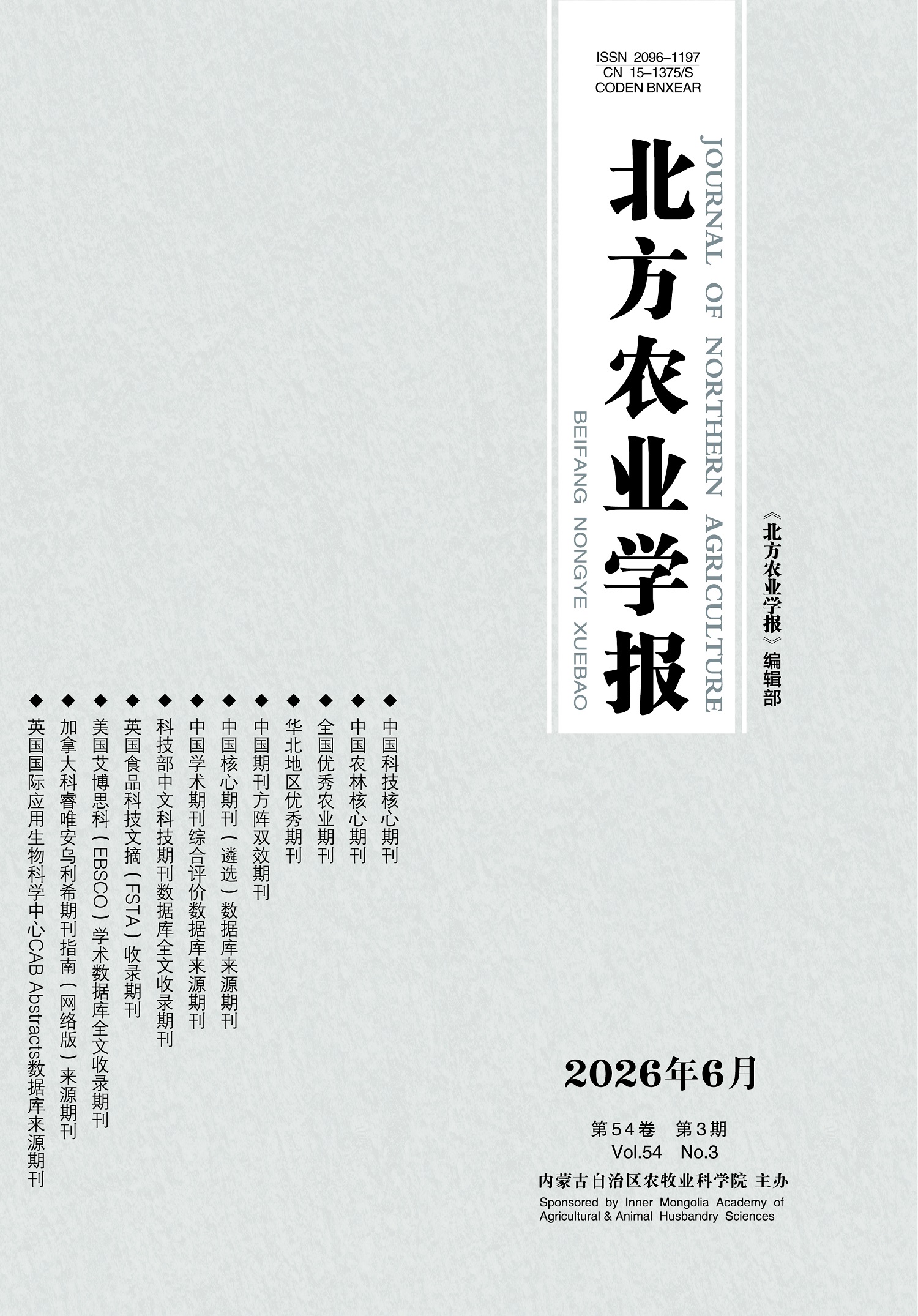
ISSN 2096-1197
CN 15-1375/S
CODEN BNXEAR
chief editor: LU Zhanyuan
Responsible Unit: Inner Mongolia Academy of Agricultural and Animal Husbandry Sciences
Sponsor Unit: Inner Mongolia Academy of Agricultural and Animal Husbandry Sciences
Editing Unit: Editorial Department of Journal of Northern Agriculture
Address: Inner Mongolia Academy of Agricultural and Animal Husbandry Sciences,22 Zhaojun Road,Hohhot,China
E-mail: bfnyxb@126.com